

Episode #219:
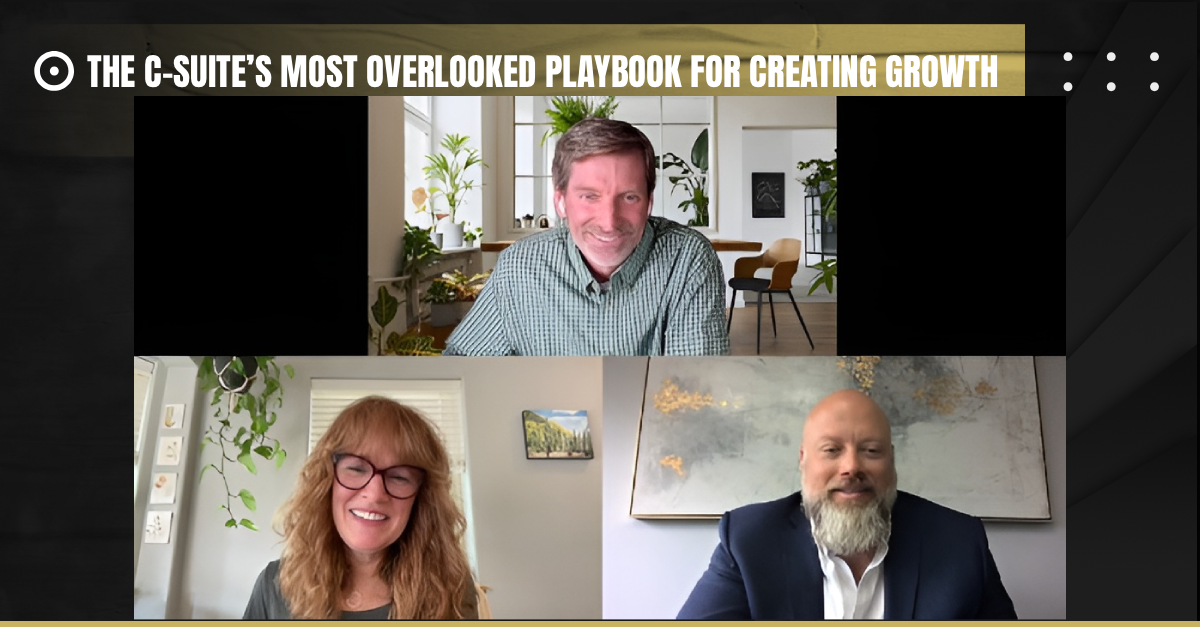
Jereme Baker, Founder & CEO at Baker Law Group, and Maureen Berkner Boyt, Founder & CEO at C2IQ Inc., share why people are the lifeblood of growth. They detail how culture, values, and incremental improvement keep teams thriving. They also discuss the data and skills behind change resilience. Together, they demonstrate how human connection can become a competitive advantage.
“If you want to succeed in business, if you want to grow, if you want to be profitable, you have to center it around the humans.” – Maureen Berkner Boyt
This episode explores how culture, values, and resilience to change contribute to sustainable growth. Jereme and Maureen share practical ways to hire for fit, build connections, pace change, and utilize AI to automate routine work, allowing people to focus on higher-value outcomes.
Follow Jereme Baker on LinkedIn
Follow Maureen Berkner Boyt on LinkedIn
Follow host Steve MacDonald on LinkedIn
[Transcript]
[00:00:05] Steve MacDonald: Welcome to the C-Suite Sales and Marketing Perspectives podcast. I’m Steve MacDonald, your host. Today we have two very interesting guests, and I will say coming from very different but very similar perspectives at the same time. We’re gonna be talking today about the C-Suite’s most overlooked playbook.
[00:00:23] Steve MacDonald: For creating growth, and that’s a big statement to make, the most overlooked. But I think by the time we get to the end of the conversation, we’ll have made the point pretty clearer. Jereme Baker, you are the CEO of the Baker Law Group, grew it from one person, you and one client, where you are today.
[00:00:39] Steve MacDonald: I’ll let you explain a little bit where you are today in a minute. You mentioned to me earlier that it was important for you as you were growing the business and expanding in the business world that you become the best version of yourself, you and your employees. And that takes incremental changes.
[00:00:57] Steve MacDonald: And I just love that philosophy, and we’re gonna hear a lot more about it today. Mo, you are a serial entrepreneur. I think you said at one point that you, you’ve been trying to create the business that you wanted to work in, right? And how you instigate change inside of businesses. And you’ve been doing that across businesses, and you’ve got one that you’ve just launched that I’d love to hear a little bit more about.
[00:01:21] Steve MacDonald: In fact, maybe I’ll turn it over to you to start, and if you could, tell us a little bit more about yourself.
[00:01:28] Maureen Mo Berkner: Thanks, Steve. Thanks so much for having me, and I’m really honored to be having this conversation with you, Jereme, as well.
[00:01:35] Maureen Mo Berkner: So I’m Mo Berkner Boyt, and we just announced C2IQ yesterday, where we are measuring the really uniquely human skills that we need in the age of AI. Steve, I’ve spent my career really thinking about how do we solve for creating workplaces where everyone can thrive. I’m a serial entrepreneur because I’m really willing to let go of the [00:02:00] how, and very focused on the why.
[00:02:04] Maureen Mo Berkner: So I’m always kind of looking around the corners for what are the issues that are coming up for workforces, what does work look like today, what’s it gonna look like in the future, and how can we solve for the human potential equation in that and making sure that everybody is bringing their full potential to the table. It’s been fun.
[00:02:22] Steve MacDonald: I believe it. I can see it in your face. I can see you love what you do. I love it. So, Jereme, if you wouldn’t mind giving us a little bit more on your background.
[00:02:30] Jereme Baker: Yeah, certainly. It’s great to be on this podcast with both you, Steve, and Maureen. Happy to be here and excited about what we’re talking about.
[00:02:38] Jereme Baker: As you mentioned, Steve, I started my practice, just me, right? I was wearing all the hats. And, you know, one of our core values of the firm, really being the best version of yourself, right? Whether you’re a paralegal or an attorney, right? We want you to be the best paralegal you can be, the best attorney you can be, but we also want you to be the best father, [00:03:00] the best spouse, you know, the best son, daughter, right?
[00:03:03] Jereme Baker: All aspects of life. We want you to be your best version, and we really want to attract people to our firm that are committed to that goal. And the other aspect of that, which really ties into that, as you alluded to, Steve, is that incremental improvement every day. We want to get better every day.
[00:03:18] Jereme Baker: We want our firm to be better. We want to be a better practicing attorney. We wanna be a better father, right? All of those aspects, and focusing on it every day and looking for ways to improve. And hopefully as time goes on, you know, we can look back at all the impact that we’ve had on others, you know, including our clients, our coworkers, and be proud of what we’ve accomplished if we continue that incremental improvement.
[00:03:41] Steve MacDonald: Well, we’re gonna take these philosophies and we’re gonna unpack it here in a big way. And I’m gonna start out, Jereme, you were on the floor. I’m gonna ask you the first question if you don’t mind. And I’m gonna use a big word to start out, people business paradox, what that means, right?
[00:03:58] Steve MacDonald: But you’ve been in the [00:04:00] middle of scaling your business. And if you don’t mind telling us how, you know, how many employees you have now when you start to answer, because what makes you an expert in scaling businesses. But I’d love to have you explain what you think the people business paradox is when you’re scaling businesses.
[00:04:19] Jereme Baker: Yeah. So, as I mentioned, I started, you know, it’s been about 15 years or so. 2011 is when I started the firm. We’re now at about 60 people, including independent contractors. So we’ve had a lot of growth, and a lot of that has really accelerated in the past few years. As far as the people paradox.
[00:04:37] Jereme Baker: It’s funny, just this week I was talking to a doctor at an event, and I asked him, what’s one of the biggest challenges your business is currently facing? And the first thing he said, well, you mean other than staffing? So, you know, no one can escape that, right? And especially when you’re in a services-based business like we are as far as being [00:05:00] lawyers. Lawyers are doctors especially. I mean, it affects every business, of course, whether you’re building widgets. But especially, I think, in the services business.
[00:05:17] Jereme Baker: So, some of the challenges is that, you know, not only do we have a marketing department, we have a sales department, we have an accounting department, a collection department, right? Just like any other business. But the product that we sell is the service that we deliver, right? It’s done by human, right? In the case of the medical doctor I was talking to, you know, the client comes into the office to get the service. Our lawyers, they go to court.
[00:05:34] Jereme Baker: They are arguing or making arguments or advocating for their clients in front of a judge or a jury. If they’re negotiating a settlement or trying to strike a deal, they’re negotiating that with another person, another attorney, right? So we’re talking to our clients on a daily basis. So kind of counterpose that to, you know, I’ve got a cell phone.
[00:05:59] Jereme Baker: Right. I’ve had this cell phone for about five years. I’m not one to get the latest and greatest model, although I think I’m due for a new model. But I’ve had this cell phone for five years. How many times have I talked to Apple in those five years? Well, I’ve probably talked to someone once or twice, but it probably wasn’t Apple, it was probably T-Mobile.
[00:06:16] Jereme Baker: Right. In five years. So that, I think, is some of the difference between, you know, our business and more of a product-based business. Although we all face this sort of people paradox, which is how do we get the right people into our company, how do we train them, retain them, and make sure they fit into our culture and we continue to grow our culture when we’re so heavily reliant on our people.
[00:06:40] Jereme Baker: And so that’s the challenge. You know, in addition to that, I would say our revenue generation is directly tied to our people as well. So if we have an attorney that’s out sick, an attorney that quits, or an attorney that we have to let go, that revenue impact is felt immediately that day.
[00:07:01] Jereme Baker: So, it’s pervasive as far as how reliant we are on our people. And it’s why it’s so important that we have great people on our staff, but that we also are creating that culture to retain them and to allow them to be their best version, to continue to get better, to improve. So that’s critical. But it is a big challenge for sure.
[00:07:23] Steve MacDonald: Well, you know, Mo, before I give you a chance to enter in on this, I just wanted to accentuate the point of, and you had said in the past, you know, we’re in a people business. We’re all in the people business. And in fact, I had the privilege of hosting a podcast with a Chief People Officer that had a PhD, and he did his thesis and proved what we all know, which is better engaged, more engaged employees translates to higher engaged customers, which translates into increased retention and revenue.
[00:08:00] Steve MacDonald: So focusing on our employees, and like you said at the beginning, to be their best self, not just their best self at the office on the job, but in general. And I’d love to turn it over to you, ’cause I can see the ideas that you’re wanting to extol here. What’s your thoughts on all this?
[00:08:20] Maureen Mo Berkner: Well, I think, I mean, it wasn’t just the one person that you interviewed, Steve. I mean, there’s so much data out there. Ignore it at your peril in terms of if you want to succeed in business, if you want to grow, if you wanna be profitable, you have to center it around the humans.
[00:08:39] Maureen Mo Berkner: Because it is truly, and it is this tension. It’s always interesting to me, having done this work for so long, that there are so many leaders that say, you know, yeah, that’s an afterthought. Like, we’ll do that, we’ll work on culture, or we’ll work on the leadership skills, or we’ll work on all these things. But, you know, we gotta make the donuts.
[00:08:59] Maureen Mo Berkner: It’s like, well actually, if you wanna make the donuts really well, you gotta focus on the people first. And when you focus on the people first, guess what? You can’t hide anymore what your culture is like. People are leaving. They’re talking about your business. Whether it is a Reddit thread or Indeed or so, you’re gonna attract and retain the best talent when you focus on this.
[00:09:26] Maureen Mo Berkner: So this paradox of we gotta find the right people, you’ll be able to find the right people if you have a culture where people can thrive.
[00:09:34] Steve MacDonald: So that’s a point that very few people think about. They think about a company culture as that once people are here, they want to stay. But people are interviewing us as businesses as much as we’re interviewing them.
[00:09:48] Maureen Mo Berkner: If you’re having trouble, it’s because people have already looked in at who you are, and they’re like, absolutely not. Great, they have an opening, but no thanks. I’ve got this one life to live. I’m not gonna go work at someplace that feels like going to the rock pile every day.
[00:10:04] Steve MacDonald: Now, Jereme, I’d love to get your point of view on culture, and I’m gonna ask you to put a number on it. I’m gonna ask, on a scale of one to 10, how important culture is to growing long-term sustainable growth for your business? One, it’s not important at all, could care less. Ten, it’s vital to our long-term sustainable growth for the business. Like, where would you put it and why?
[00:10:30] Jereme Baker: Well, it has to be a 10, right? I mean, it is vital. Again, as I mentioned, you know, the people are the lifeblood of our company. It’s literally we can’t do anything without them. We can’t provide legal services. You know, the way we’re structured, like most companies, we can’t bring on a new client.
[00:10:50] Jereme Baker: I mean, I used to be the one to do all those things. I brought on the client, I did the legal work. But as we scale and as we grow, I’m not the one doing those things anymore. And it is people doing all of those things from the initial marketing to try to get a client to even call.
[00:11:07] Jereme Baker: It’s done by a person through sales and intake, all the way through performance of the services. And then, you know, when we complete those services, tell the client thank you. That’s all done by humans. So it’s vital. And then the culture piece, right, is because, especially with our firm, I think with any firm, even to maintain where you are, you have to have a good culture. Otherwise people will leave.
[00:11:24] Jereme Baker: But I think it’s especially important in a company like ours that is looking to grow and has been growing, because not only are you looking to retain the people that you have, but you’re looking to continually add new folks. And if you have a caustic culture, if you don’t have a good culture where people want to spend the majority of their waking day every day or five days a week, whatever it is, then they’re gonna leave. It’s not just about the paycheck, it’s not just about the money. If it is, then they’re gonna hop and leave as soon as someone offers them an extra, you know, $5,000 or whatever it is. You have to give them a reason to want to stay. And it can’t just be about the money or the status, whatever it might be. It has to be about the culture.
[00:12:16] Steve MacDonald: So there’s an interesting aspect of culture that doesn’t get talked about a lot. Culture is one of those buzzwords, right, that does get talked about a lot. But culture can be one of those things where, well, we’ve got our values on that plaque on the wall over there.
[00:12:33] Steve MacDonald: We’ve got a mission statement. But we know it’s so much more than that. But you have an expertise, Mo, in change management and resilience. And one of the things that we know, especially for a scaling business, is that business is changing constantly. Our clients are changing constantly.
[00:12:53] Steve MacDonald: Their needs are changing constantly. Trends in the market are changing constantly. We get COVID thrown at us, right? We get AI thrown at us, like, you know, we’re gonna launch into a new territory, a new practice area. I mean, there is constant change. How does that impact the culture? But then what do we need to do to be leaders that are promoting a company and a culture that is as resilient to that and is, you know, as prosperous within that as we can?
[00:13:26] Maureen Mo Berkner: So, um, I’m pretty big on data and really understanding kind of what is the baseline that we’re living in. And I appreciate that you mentioned COVID, Steve, because when we look at the pace of change and what’s happened with the pace of change even since 2019 through today, it is accelerating at astronomical rates.
[00:13:46] Maureen Mo Berkner: You mentioned AI. Right. What AI has done just in the last 18 months. So typically, organizations in 2019 were planning about two organizational changes a year. That’s up to 10 today. So when we’re looking at—and you gave great examples for Jereme’s business, right? If he wants to get into a new market, if he wants to maybe acquire a smaller firm, any of those things—
[00:14:15] Maureen Mo Berkner: So we have this accelerated pace of change. We also have people that are extraordinarily burned out. We’re only built for so much. So 71% of employees are feeling overwhelmed by the pace of change. Only 43% of them feel like they will support change, and 66% of employees are burned out.
[00:14:40] Maureen Mo Berkner: Right. So we have burned-out people. We have an accelerating pace of change. We have these expectations: “Oh, here’s five new AI tools that we wanna use for any number of things.” And so we are in a moment in time where this baseline is only going to get worse, quite frankly. So change management is about a process.
[00:15:04] Maureen Mo Berkner: Change resilience is about a skillset. And so if we want to have these cultures where people can come and become the best version of themselves, right, and continue to have incremental change, we really need to address change resilience skills, and we need to address human connection skills. Because those two things—it doesn’t matter your industry, it doesn’t matter your organization size—those skills are critically important for your people to be able to show up and deliver great business results, quite frankly.
[00:15:38] Steve MacDonald: How does this ring for you and your business and what Mo’s saying here?
[00:15:43] Jereme Baker: I agree with what Mo’s saying. I think, you know, one thing I’ll add to that, right, which I do think is important—you know, it is that mindset, right? So it has to be part of your culture, like I mentioned: incremental improvement, right? So that’s part of our mindset, that’s part of our values. That’s what we share with our staff, right? What we share when we’re bringing on someone to add to our team, right?
[00:16:04] Jereme Baker: That this is who we are and this is what we’re about. We’re about getting better and improving. So there is the concept that we are going to be changing, right? We’re not gonna be staying the same. Now, at the same time, I think you have to do that in a responsible way. You can’t overload, you can’t throw too much change at anyone.
[00:16:21] Jereme Baker: It’s just not gonna work. And I’ve made that mistake once or twice upon a time, you know, where, oh, let’s do all this stuff, you know, all at once. And not only do you get this kind of confusion—okay, well, which one do I do first, right? What’s most important?—but you could get that sort of burnout.
[00:16:37] Jereme Baker: So I’ve had to adjust and say, okay, well, yes, our mindset and the people that we want to attract. Because you bring someone on board and they don’t want to change, they don’t want to improve, they don’t want to get better, then it’s not gonna be a good cultural fit, right? They have to be committed to that.
[00:16:52] Jereme Baker: You can’t make them be committed to that, so you just don’t wanna bring that person on board. So in your recruiting process, you wanna make sure you’ve got that buy-in from day one, right before they even start, and that it’s a good fit from that perspective. But then also you have to manage that change and that improvement, and you also have to continue to reinforce it, right? So it’s that mindset: we’re coming to work, we’re thinking about ways we can improve and get better.
[00:17:15] Jereme Baker: Not that it’s the main number one focus of what we’re doing, right? But there’s less resistance to that change when you have that as part of your culture.
[00:17:26] Steve MacDonald: So you talked before about kind of the neuroscience behind this. I’d love to get a little bit of—I love your data focus, I love those stats. Like, two-thirds of people are burned out. I’m like, oh my goodness. ‘Cause we all know if we don’t have high-performance teams, we don’t have a business, right? And if two-thirds are burned out, that’s a problem. But take us through the neuroscience.
[00:17:48] Maureen Mo Berkner: Yeah. So this is where I’m such a dork about this stuff. Um, and it’s so fascinating once you understand it. So there’s both the neuroscience of connection and then there’s the neuroscience of change. So I’ll start with the neuroscience of connection.
[00:18:04] Maureen Mo Berkner: So as human beings, we are biologically wired to need human connection. This goes all the way back to when we first stood up on two feet. If we were alone, right—if I was not part of a group or a tribe—it meant I would die. I needed to be accepted into the cave, right? If I was out on the plains alone, I couldn’t survive. The saber-tooth tiger would get me, something would get me.
[00:18:15] Maureen Mo Berkner: We like to think we’re these higher-order beings now. We’re not. That neurology has not changed. And so, Abe Maslow almost had it right with his pyramid of needs. He actually had belonging up higher, and I think were he alive today, with the neuro-scans and the things that he could see, he would understand. We see belonging as a safety need.
[00:18:50] Maureen Mo Berkner: So if I’m coming into work, I need to feel like I belong. If I don’t, here’s what happens: if something happens to me where I feel like I am not a part of the team, or somebody has done something—usually unintentionally—I go into amygdala hijack. I go into fight or flight, my IQ drops. I’m literally trying to figure out how to be safe again, how to belong.
[00:19:04] Maureen Mo Berkner: I’m not thinking about what case I might be working on if I’m Jereme, right? I’m not thinking about billable hours. I’m in my lizard brain. So when we’re talking about cultures of connection, teamwork, belonging, and fit—it’s a biological, neurological need. It is not warm and fuzzy at all. If you want high performance, you figure out that piece of it.
[00:19:24] Maureen Mo Berkner: The other piece, when we’re talking about change, is that we spend about half our life in habit. Think about the time you showed up in a parking lot somewhere and you don’t remember the drive. Or in the morning, you’re standing in your kitchen with a cup of coffee and you don’t remember brushing your teeth, choosing your clothes, any of that. We’re in habit.
[00:19:56] Maureen Mo Berkner: Why? Because although our brain only takes up a very small percent of our body mass, it consumes the lion’s share of oxygen. So we stay in habit loops to protect our brain—so it can work on the important things, not “what socks am I gonna wear today,” but “what do I need to do in this legal brief?”
[00:20:00] Maureen Mo Berkner: Now, when we have a high rate of change—think about the last time your email provider changed their layout and suddenly you had to think: “Where’s Send? How do I change my signature?” You’re out of habit. You’re spending oxygen on something that is not higher-order thinking. It’s just whatever that change has thrown in front of me.
[00:20:52] Maureen Mo Berkner: And Jereme, I loved what you were saying—like, you’ve made the mistake of too much change at once. Wouldn’t it be great if we could put our employees in a bubble where they weren’t also experiencing external change? Because it’s not just the change happening in our organizations, it’s also what’s happening out in the world. So what’s happening in their life?
[00:21:21] Maureen Mo Berkner: We want to be in habit, but we can’t, because there’s change everywhere. So we’re having to think about all of these things we normally wouldn’t. We need to allow people to develop the skillset to cycle through that change quickly, so they can get back into habit—on the mundane.
[00:21:58] Steve MacDonald: By the way, I have a son that has an overactive amygdala, so I got that analogy big time. But here’s what this makes me want to do: after hearing Jereme talk about culture being a 10 on a one-to-10 scale, and everything you’re saying here, I’m like—I gotta have a Chief Culture Officer. Now I gotta have a Chief Change Officer. I’ve gotta elevate this to a C-suite level because it has such a profound impact on my business.
Typically, HR has kind of been the department that—well, I wouldn’t say in charge of culture—but they’re the ones thinking about it the most, the ones we usually turn to and rely on. But most HR leaders—and I’ve talked to a ton, I run an entire podcast just for HR professionals—they have imposter syndrome. They struggle terribly to get a seat at the table. They’re looked at as a support department.
They are not what we just described here: the agents that are gonna help us make these changes internally. So Jereme, I’d love to know your perspective on the importance of the HR function, and should they have a seat at the table?
[00:23:21] Jereme Baker: No, I think it’s certainly critically important. Right? Because, as you mentioned, they’re typically the ones in a typical organization who are looked to—as you said—to kind of have a pulse on the people. Whether that’s fair or not, whether it’s always the case, that’s the perception.
And I think one of the things we have to keep in perspective is: in a growing business—and again, I can talk back to my experience—once upon a time, not that long ago, I was the HR, the CEO, the COO, the attorney. All of those things. So we have to also keep in mind these companies that are growing from “we don’t have an HR department” to “we don’t even have a COO.”
You’re trying to prioritize those things as you grow. Like, okay—do we need an HR person? Is this the time? Is it in our budget? Can we afford that? We made that change last year, right? We were finally at a place where we could invest in it. Because it is an investment—in the company, and in your people.
And now, we have a meeting every week with our HR person. We go over the pulse of things. Again, it allows me to maybe take… I mean, it is critically important in my mind too, right?
[00:24:41] Jereme Baker: The culture and, but you know, I can delegate some of those duties now and we can make it better, right? Because quite frankly, you can only do so much, right? Kind of what we’re talking about a little bit here too. But now we have an HR department, we have someone who’s really investing more time into that.
[00:24:58] Jereme Baker: And so it’s been a big benefit to us. They absolutely should have a seat at the table because again, it is critical to retaining, you know, getting the best out of your employees, right? Getting the best version of themselves. Having a pulse on that, right? Because that’s a difficult thing. You know, not everybody’s running up to me telling me about what challenges and issues they’re having. In fact, I’m often the last person that they want to talk to about those things. So it’s really important that communication is happening and there’s a space for them to do that. But then that information is getting to the rest of the C-suite, right?
[00:25:33] Jereme Baker: The rest of management. So we understand, okay, these are some of the challenges that we’re facing and how do we improve? How do we make, you know, the situation better, whether it’s our culture or just helping that person? So that communication, having that seat at the table, you know, I think a big part of that is just simply the communication that happens when they are at the table, getting that information. And then we can look to make, and continue to make, improvements. If they’re not at the table, you’re missing a big piece there.
[00:26:01] Steve MacDonald: You know, I know that Mo, part of what you’re gonna say is that leadership themselves has a huge role in all of this, right? But what’s your point of view on HR and needing to have them have a seat at the table and why?
[00:26:18] Maureen Mo Berkner: Yeah, I think, and I would say all of this is an and. I don’t think it’s an either or, right? When you were talking about we need a Chief People Officer, an HR Officer. And you need, particularly your frontline managers and every individual contributor, because culture is how actually things get done. And that’s through the people. There has to be somebody that is strategically thinking about people, having the capacity to do that. I think most HR folks don’t have a seat at the table because they’re compliance based. They came up through: how are we keeping? What are our payroll policies? Are we making sure we’re onboarding, offboarding?
[00:26:57] Maureen Mo Berkner: ‘Cause that takes a lot of work, right? To stay on the right side of the law. The great news right now, I would say one of the positives from AI disruption is a lot of that kind of rote, mundane policy that can be done with AI now. And if you want somebody to have the seat at the table, make sure that person really understands that they are profit-loss driven. They know the numbers, they understand the strategy, and they’re looking and saying: do we have the human capacity today to deliver on this strategy? And what do I need to be thinking about? What do we need to be thinking about five years from now? But actually five is a little long, maybe three years from now.
[00:27:41] Maureen Mo Berkner: What capacity, what skills, the human talent that we have. What do we need to be doing to be ready for what we have in our strategy versus compliance?
[00:27:52] Steve MacDonald: Here’s what I am hearing throughout all of this. A big takeaway is that if managed correctly, under the right culture, the right opportunity to be your best self, resilient to change, that our people are our greatest competitive advantage. And because you know, from the dawn of time it was our product and our service and our prices. That’s the way competitive advantage was, you know, was determined. Jereme, I would love to hear your perspective on what you think one of the biggest competitive advantages is for your business, and does it come down to the people?
[00:28:31] Jereme Baker: Yeah, no, I definitely think it comes down to the people. I mean, it’s such a massive difference. You can see it. I mean, I see it in every facet of our business. You know, it could be in the delivery of legal services, when you have a great employee, right? Someone who interacts and manages the client relationship really well versus someone who avoids it almost, right? Who wants to avoid that client interaction. Everything works better, right? When you have that employee that is a well-rounded employee, they’re client-facing, they can do good legal work, but at the same time, they have a great relationship with their clients, right?
[00:29:08] Jereme Baker: It creates less issues, right? You retain your clients longer, clients are happier. They’re not calling and complaining about their bill as much, right? Because they know what’s going on with their case. They’re not just getting an invoice because their attorney’s communicating with them. But you know, same thing in every other facet, right? If you have a top performer, it’s gonna make everything else easier and make everything else work. If you don’t have a top performer, everything else—99% of the rest of the business—is amazing. But that one poor performer is hurting the business, right? Is preventing the business from really performing at its best.
[00:29:44]Jereme Baker: And that’s really how delicate I find it to be, right? And that’s why it’s so critical to have, you know, again, recruit the right people. Understand what your business needs are. Recruit the right people, train them, retain them. It’s critical in every facet of it. And it could give you an advantage to your point, right? As far as a competitive advantage. You have great people, you’re generally gonna have a great business and you’re going to be better than the competition. Now, I think as we kind of talked a little bit about AI, right? And again, kind of the concept that we have is thinking about ways that we can get better and we can improve.
[00:30:22] Jereme Baker: Well, tell me some of the things that you aren’t getting to, right? That you really want to get to—those tasks or to get to that project and complete that project—but you’re not able to. Or what’s interfering with that?
[00:30:33] Jereme Baker: Is there something that we can offload, you know, that kind of has always been there? The delegation concept, right? So you know, you’re a top manager— is there someone you can delegate to? Are you a good delegator? Now it’s incorporating that AI component. Technology’s always been there, right? AI’s just kind of a rapid growth and acceleration of technology and the way that every company has always used it to a certain extent, but now it’s even more critical. So it’s really trying to get and think about: how can we use AI in such a way to offload some of those tasks so that you now have the time to get to those higher-level projects that we’re not getting to?
[00:31:10] Jereme Baker: ‘Cause everybody at every company, every CEO, can think about all these things that they want to get to, right? And we just can’t get there because we don’t have the resources. It comes down to—well, if we had an unlimited budget, of course we could. But no one has that. So you’re trying to think in this AI age, what can we offload, so we can get to some of these higher-level tasks? It’s not, to me, about replacing employees, right? It’s about getting them to perform some higher-level functions and eliminating some of those more mundane, routine tasks. And if we do that, if we can marry the two—top performers, great employees, with this getting-better, improving-everyday, implementing AI—then that’s, I think, where our competitive advantage is.
[00:31:51] Steve MacDonald: Yeah, if people are a competitive advantage, getting them—we all have those proactive things that we want to get to every day and we never get to. So if we can take our biggest asset, our biggest competitive advantage, and make them more productive, they’re gonna love it too, ’cause we all get frustrated by not getting to those things on our lists. Mo, what’s your thought on people as competitive advantage?
[00:32:15] Maureen Mo Berkner: I mean, that’s what this whole conversation’s been about, right? Like I could go and I can find legal services. There are thousands of firms that I can go to, whether it’s a one-off shop or whether it’s a—I’m gonna choose Baker Law because of the people.
[00:32:31] Maureen Mo Berkner: Yeah. Right. That’s just hands down it. I’m coming to an attorney generally ’cause things aren’t going well. Right. Maybe there’s a happy thing happening, but I’m also probably at one of my most vulnerable times. Something has gone wrong, or I’m having to think about dying, or I’m—like all these things. I want to work with really exceptional human beings during that process, right? So I can choose, and I’d said this before, there’s nowhere to hide. So I can go out and I can read all of the reviews. I can talk to people, right? If I’m gonna work with Jereme’s firm, I’m gonna ask for some referrals so I can chat with people that have worked with them. That comes down to the humans that are delivering the service, right?
[00:33:14] Maureen Mo Berkner: And so it truly is—there isn’t much new under the sun product- or service-wise. Occasionally there are some people that are in Blue Ocean, but more often than not, I’m choosing between people that offer very similar services or products, and I’m choosing based on who the humans are that I’ll be working with.
[00:33:33] Steve MacDonald: I have to tell you a story that accentuates what both of you are saying right now. I was talking yesterday, did a podcast with one of our clients. They’re a technology company and their number one channel partner. And the channel partner told a story that before these guys came in—this new, they had a regime change—he said they had the market-leading product, but I was looking to get outta my contract ’cause I didn’t like the people I was working with. Right? To him, the market-leading product wasn’t the most important part.
[00:34:11] Maureen Mo Berkner: No. There might have a couple little—you know, if you’re talking software, there might be a couple different features, but I’m getting terrible customer service. And oh, by the way, if you’re sending me to a bot and that bot is wrong, or I’m frustrated and I’m having to push, you know, three trying to get to a human—the humans in the loop are so critically important. It’s how we choose, right? We don’t, again—I’m gonna go back to that belonging piece, right? And feeling like, I don’t wanna be with jerks. Even with my service providers, my vendors, I’m still looking for a sense of belonging with them, right? So the human connection just cannot be overstated—how critical it is.
[00:34:55] Steve MacDonald: Well, I have one last question that I want to ask both of you, and it tends to be the hardest question to answer, so I preface it that way right now. But our poor human brains—we can’t remember more than about two or three things max at a time. So we’ve talked about a lot already. If there was one takeaway that you wanted the audience that’s consuming this podcast right now to take away from our conversation—the most important thing—what would that be? And I’ll let whoever wants to start first jump in.
[00:35:34] Jereme Baker: Yeah, I mean, I can talk about it. I mean, we kind of alluded to it a little bit before. It’s kind of high-level, but I think it’s critical to what we’re talking about here. And, you know, it’s one: understanding your business needs. And from there, the starting point—one, who do you have, right? I mean, it’s the culture. Is your culture the way you want it to be? And if it’s not, fix it. Right? I mean, part of it too is: do the staff that you work with—do they know what your values are?
[00:36:00] Jereme Baker: Right. If they don’t, if you think they don’t, I mean, you can send out a poll and find out if you think they do or if you’re not sure if they do, but make sure that they understand what the values are, and that you are sharing that with them. And then make sure you are recruiting people that are in line with those values.
Right. Then you again train, you work on retention, you work on improving your processes, making it better, you know, you invest in your people. I think that’s the most critical component to this. And I think the one thing that I want to try to take away from this is it does, you know, kind of start in with your people. But really just take a look at yourself, right? What are your company’s needs? And do your people know your values? Do they know what you stand for? Because it’s a lot easier to recruit when you know what they are and the rest of your team knows what they are. And then you can see if that person is gonna fit into it.
[00:36:51] Maureen Mo Berkner: Yeah, I’m gonna piggyback on that, Jereme. And I would say in all of this, hope is not a strategy. You actually need to be very intentional about this, right? You need to measure, you need to be very clear what skills are needed, you need to assess, you need to—uh, Jereme, you alluded to, right?
Do you need to do both kinds of poll surveys in terms of the culture, and then where do you have skills gaps, right? All of those things, and be forward focused. Here’s where we are today, where do we wanna be, and what do we need to do from a PE standpoint to get us there very, very strategically and proactively. Not just, you know, we hope this is all going well for us and we feel like nobody’s really coming to us and saying things are bad. I’m gonna go back to the stats: only 43% are willing to support change and 66% of employees are burned out.
If you’re not taking a hard look in the mirror, and if you’re not assuming some of those people are in your organization, I’ve got some real estate to sell you on Mars. Right? So it’s constant. You can’t take your eye off this at any period of time. You should be looking at these numbers just like you’re looking at your financials, because if you’re not, it’s a high-risk area. So thinking about your human risk, right, and what you’re doing to mitigate human risk to unleash human potential.
[00:38:13] Steve MacDonald: I have to tell you, the mission behind this podcast is to bring different perspectives, different insights from all of our experiences so that we can help each other be a part of that rising tide that lifts all boats. And I think we were waves on that tide today that rarely get discussed in the way that we did.
And you know, we have all kinds of growth plans. We have three-year plans—I don’t know if anybody does five-year plans anymore—but we have plans, right? And I’m not sure what we were talking today, talk about lack of a seat at the table. Are these a part of our plans? Right? A very dedicated part of our plans.
So I just wanted to say thank you for airing this and helping to educate us all on yet again one more thing we have to put on the proactive list to make sure that we’re taken care of. Thanks for coming on. I really appreciate it.
[00:39:08] Jereme Baker: Yeah, it was my pleasure. I appreciate it, Steve and Maureen. This was great.
[00:39:11] Maureen Mo Berkner: Yeah, same. It was an honor. Great to be here.