

Episode #246:
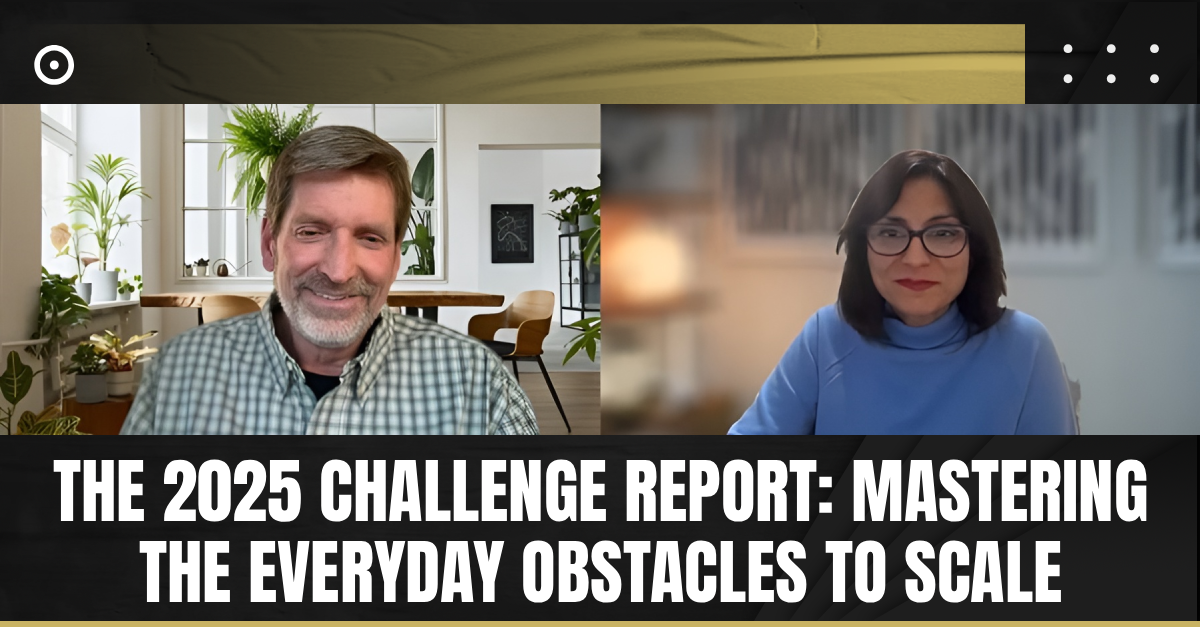
Vidhya Srinivasan, Chief Marketing Officer at Prophix, explains why internal alignment is the most significant barrier to scale. She describes how cross-functional miscommunication creates friction, anxiety, and stalled execution. Vidhya shares how simple, repeatable processes and clear engagement models unlock growth. She closes with a reminder that going back to basics is the fundamental foundation for sustainable scale.
“If we can get past the internal friction points and make our operational processes like clockwork, then scaling the organization is going to be a breeze.” – Vidhya Srinivasan
This episode gives leaders practical steps to remove internal roadblocks that stall growth. Vidhya shows how simple funnels, disciplined communication, and consistent feedback loops improve execution. She also explains how operational clarity helps marketing, sales, and product teams perform in sync for sustainable scale.
Follow Vidhya Srinivasan on LinkedIn
Follow Steve MacDonald on LinkedIn
[00:00:05] Steve MacDonald: Welcome everyone to the C-Suite Sales and Marketing Perspectives Podcast. I’m Steve MacDonald, your host, and today we have a very surprising conversation. And I’ll explain that in just a minute, but with a phenomenal opportunity to talk with Vidhya. Now, Vidhya, you’re a three time B2B CMO, you’re also a former Chief Product Officer, so you’ve held multiple roles within the C-Suite, which a lot of us as CMOs haven’t had the opportunity to do that.
[00:00:29] Steve MacDonald: Kind of see things from the other side. And we are going to use that background and we are going to talk about the things that are the most important challenges that we face as C-Suite executives because the first time that you became a CMO, you didn’t give up your responsibility to be a CMO, but you adopted a huge amount of more responsibilities for the overall growth of the business.
[00:00:53] Steve MacDonald: And that’s the question that we ask every B2B C-Suite executive that comes onto this podcast. And then you take all the answers to like, what are the two greatest challenges that we have to grow our businesses? We are going to talk about the top three, but before we get into that, what I’d love to do is turn it over to you, because that’s not the only thing that defines you.
[00:01:14] Steve MacDonald: In fact, you and I were just talking about we both love hiking and you do a lot of hiking with your husband. In fact, you’re going to hit a milestone this year that I’m going to let you talk about. But if you wouldn’t mind just expanding more on your background, and then we’ll dive right in.
[00:01:28] Vidhya Srinivasan: Yeah. Well, first of all, thanks, Steve, great to be here. I know this is my second time around on your show, so great to be here. Yeah, I mean, as you said, I’ve had the opportunity to be in two different capacities in the C-Suite. Certainly, you know, I have a product background. I have been an engineer, I’ve been a product manager.
[00:01:47] Vidhya Srinivasan: I’ve kind of done marketing, so it’s like a culmination. And I always think about my USP as, you know, the intersection of product, marketing, and go to market. That’s what I love doing. And it makes every day a fun endeavor, right? So, yeah, I mean, on a personal note, as you mentioned, we love hiking.
[00:02:05] Vidhya Srinivasan: I used to live in Colorado, went to school in Colorado. But yeah, certainly we are going to hit like 200 miles of hiking this year. I’m very excited about it. Hopefully we’ll get a little more because we still have two more months for the year. But yeah, it’s what keeps the work life balance going, so yeah.
[00:02:24] Steve MacDonald: I love that. You know, we share a passion for Colorado. I live just south of Denver and so I go jogging most days and I look out at the Colorado Rockies and I’m just amazed by it. We actually had Northern Lights here two days ago. Yeah.
[00:02:38] Vidhya Srinivasan: Yeah. Even in California. I think last night.
[00:02:42] Steve MacDonald: Phenomenal. We don’t get that too often. Right. Well, let’s do this. Let’s kind of dive in deep because this idea of mastering everyday obstacles to scale our business. So here are the big challenges that came out of putting all together the answers from all the C-Suite executives on what are our biggest challenges to growth.
[00:03:01] Steve MacDonald: So the first one was internal alignment. Over 70 percent of C-Suite executives said that’s our number one challenge, just aligning internally. The second one was a lack of deep understanding of the voice of our customer, right? That’s the highest authority voice in our business. Higher than the board, higher than us, the C-Suite executives, right?
[00:03:24] Steve MacDonald: That’s where we should be aligning behind. Yeah. And then the third one is one that as CMOs we know really well, how do we balance long term versus short term? Nobody goes into a board meeting and has a board member look and say, hey Vidhya, you know, how is that brand development plan going? Nobody says that, right?
[00:03:45] Steve MacDonald: They’re like, hey, what’s this quarter’s quota look like? What’s next quarter turning out? Yeah. So it’s something that we know we have to work on and we have to develop, even though it’s something that we don’t get a lot of credit for, and we don’t get a lot of credit in terms of how that impacts growth.
[00:04:00] Steve MacDonald: Yeah. But it does in a big way. And so I would love to just ask you to kind of just to start out here, right, because we are going to try to unpack this today and what does this mean for scaling our business? But talk to me about what you feel is the everyday barriers to creating sustainable growth that aren’t the sexy ones, right? The ones that we’ve really got to focus on.
[00:04:23] Vidhya Srinivasan: Yeah. Look, I think things usually boil down in my head, right? Things are usually very simple things that we all struggle with because as an organization, I can tell you about, you know, what we are going through, right? In your organizations, this is Q4 for us.
[00:04:39] Vidhya Srinivasan: So you are trying to hit the targets, create the quarter pipe, close deals, so it’s all hands on deck. And internal alignment, if it’s not there across the sellers, across the marketing people doing the demand gen or events or whatever it is that we are trying to align on, no pun intended, right?
[00:04:59] Vidhya Srinivasan: You are going to have a lot of friction and no outcomes, right? Which is not a good thing for the organization. So sometimes the hardest thing, hardest knot to crack is the simplest of things that we struggle with, which is ensuring our teams cross functionally are aligned to the same goals that we all want to drive.
[00:05:20] Vidhya Srinivasan: And sometimes you have organizations all running towards hitting the goals in silos and not enough communication across cross functional teams is a huge challenge. Again, none of this is intentional because people are all running fast and furious every day.
[00:05:38] Vidhya Srinivasan: But they just forget to do it. And that small lapse of, you know, not doing certain things just creates friction and creates unnecessary anxiety and finger pointing, right? At times that translates into a lot of noise, right? So the signal to noise ratio at times is primarily because of simple communication, simple engagements, right?
[00:06:05] Vidhya Srinivasan: Keeping everybody from a sense of knowing what’s happening and ensuring everybody’s engaged in what we need to do. Cross-functionally is the simplest of things that people can and should do to avoid the internal anxiety that happens with more organizations. And then, that creates sort of a ripple effect in terms of how it becomes a barrier to expand and grow things because you can’t get past this.
[00:06:36] Vidhya Srinivasan: Friction points within the organization. So, to me, you know, primarily when I think about scaling an organization, it’s the ability for us to identify things that can be rinse and repeat. ‘Cause the operational things, the processes, these should be like clockwork, right?
[00:06:54] Vidhya Srinivasan: We shouldn’t have issues in that. As the organization matures, depending on what size you are, you know, I’ve worked for like the Cisco’s of the world, ServiceNow’s of the world, and I’m, you know, I work for Prophix now, which is a much smaller company. So you can see the difference in sort of maturity of what is rinse and repeat and you can rely on versus where you have to sort of engage at varying levels of processes to ensure that everybody understands the mode of engagement, the way we communicate, the way we bring people in to ensure there’s no misalignment. And if we can get past that, then scaling that is going to be a breeze.
[00:07:36] Steve MacDonald: You paint such a vivid picture, you know, and as Chief Marketing Officers, we know we have to demand gen marketing, we have to have customer marketing, we have to have product marketing.
[00:07:48] Steve MacDonald: I mean, we’re like really disciplined in all these different ways that we need to communicate. You just so vividly painted a picture there of if we don’t have a plan for internal communications, we typically don’t even think about it, right? It’s like, oh, there’s decisions that are made at the C-suite.
[00:08:06] Steve MacDonald: And then yeah, everybody goes out into their own departments, they’re in charge of their own departments, and they’re going to just communicate that and everybody’s going to kind of magically know what they need to do. And, you know, you brought up that you had worked at Cisco. I just had a woman on the podcast, three-time BW CMO. She was a CMO at Cisco, IBM, GE.
[00:08:27] Steve MacDonald: She was global head of marketing at Nielsen IQ, and she says, “Steve, there’s only one thing I want to talk about in your podcast.” And I’m like, oh, okay. What is that, right? And she was like, “The lack of execution.” She says, that’s where all good strategies go to die, right? And so we can have the best go-to-market strategy, but guess what? High-performance teams are what pull it off.
[00:08:49] Vidhya Srinivasan: Yes. Yes.
[00:08:51] Steve MacDonald: And we just don’t talk to them the way that we know that we should. But we’re marketers; they’re an audience for us. Right? A really important audience.
[00:09:00] Vidhya Srinivasan: Yeah. I mean, I think you brought up another critical piece of the top-down versus bottoms-up. I think there is always that challenge also for a majority of the organizations where we make decisions at the C-Suite, and it’s on us as leaders to ensure that everybody is aware of what our goals are as a company and what does it mean for each of us and what are our joint MBOs. In terms of working with sales, working with product, working with customers, customer service, right? So all of these components that we are, as marketers, tied at the hip in different ways. You think about cross-sell versus a new-logo moment, right? So you are kind of partnering with folks and ensuring we have something that we can bring to market and really drive
[00:09:50] Vidhya Srinivasan: pipeline for the organization. I think that’s a piece that’s all, you know, from a leadership perspective, it’s on us to ensure we can trickle down and translate it for everybody involved — that you have to align and partner with the CS folks, with the sales folks, with the product team.
[00:10:09] Vidhya Srinivasan: Because if we can do this together… a launch. Think of a product launch. A product launch requires product and product marketing to be working together. You need demand gen to know what exactly the messaging is. You need the sellers to know that there is going to be a launch and a campaign that they should be ready to catch, right?
[00:10:28] Vidhya Srinivasan: The SDRs, the BDRs. So it requires a village for every single initiative, big or small, to make it successful. And so the internal alignment is the biggest first step for us as an organization to show maturity — to then be able to scale.
[00:10:47] Steve MacDonald: Big thing I’ll take away here is that like, so important. We need to dedicate more time to it. And in our previous conversation you said it’s an ongoing process, Steve. You’re like, as much as I would like my wife to probably feel that she could tell me something once and then it’s good to go, right? It doesn’t work that way.
[00:11:05] Steve MacDonald: It doesn’t work that way in business either, right? It’s not like one and done. We can kind of like send out an email and everybody kind of knows what’s going on. This is a continual marketing strategy, communication strategy, right?
[00:11:18] Vidhya Srinivasan: Yes. Yeah. Look, I think it is a continuous process. And it’s ongoing, right? And especially think about like when you have new leaders come into organizations, right? We have to think about resetting that. You’re never one and done. So like that part of ongoing evaluation — like it is like the feedback loop, right?
[00:11:38] Vidhya Srinivasan: It’s like, okay, we did this. Now we have a new player in town, so now we have to kind of work that to ensure whatever we have going on is in alignment with my new partner. So like, for instance, I have a new partner CRO that joined our company. So it’s really important for me to spend the time with my new CRO to ensure that we are aligned and we have the same approach and we are joined at the hip to ensure it’s successful. And you know, the other part I almost feel like is, individually, each of us is not — I think of the orchestra analogy always — we are not individual.
[00:12:16] Vidhya Srinivasan: Musicians, right? Or, you know, we are not instruments in an orchestra or vocalists in an orchestra. We need everybody to sing from the same sheet for this to sound like an orchestra, right? So we all need to perform our piece for this to be successful. And we all have to be in sync. So that’s the biggest piece that I feel like, you know, part of the internal alignment is.
[00:12:38] Vidhya Srinivasan: Definitely leadership alignment at different levels within the organization, but also making sure that we have individually, like each of us as individuals, play our part to be in sync with the rest of the team.
[00:12:51] Steve MacDonald: I love that analogy with an orchestra. So here’s what it means to me. What you were just saying there is that it’s not like the string section plays for a little bit, stops, and turns it over to the horn section, right? Then the horn section stops and the drum section — the percussion section — comes in. Like, we talk about this being a team sport. But it’s not like we’re handing a baton, like marketing creates a lead and then they turn it over to sales, and sales goes on.
[00:13:40] Steve MacDonald: We forget about that and we go back to creating more leads, right? This is an orchestration that comes together. 86% of B2B deals — this is a Forrester stat — stall at some point, right? And so there’s no way that the board is going to say, “Hey Vidhya, as soon as you turn over that MQL or that SQL, you’re good to go.”
[00:14:00] Steve MacDonald: Right? There’s a massive amount of nurture campaigns and sequences and things that we can do to help. We are a team coming together. We are an orchestra that continually plays until we actually get that closed deal, right? And so I love that analogy because we act more like a baton pass, right? We tend to say, “That’s our job. Now we turned it over to you. Now you gotta go do what you do.” Right? And that’s just not the way that it works.
[00:14:09] Vidhya Srinivasan: No. I mean, look, I think at the end of the day, this is something that’s really close to my heart. Part of the challenge sometimes is everybody thinks if you have an event, you do the event and you’re done. It’s not, right? As part of being a field marketer or an event marketer, your job is to ensure the post aspects — to ensure every lead is getting, right, has the details to be warm enough to be handed off to the rep and followed through, to ensure that it’s routed to the right rep, and everything is happening as expected. And if it’s not warm enough, to your point, how do we create the nurture to make it warmer and drive it down the funnel?
[00:15:00] Vidhya Srinivasan: So I think it’s a very, very important aspect, and most organizations and individuals suffer with this — they think their job is done as soon as a post-event report goes out, right?
[00:15:03] Vidhya Srinivasan: It’s not. Their job is to ensure every rep has been assigned and has the right details for that to be converted to closed won. The solo performers versus the orchestra is going to be a critical transition for a lot of folks. But that’s what’s going to make the execution — as you said earlier — important for execution to happen flawlessly. This notion of being part of an orchestra is a very critical thought process to ensure that we are always in sync and sound great together, right.
[00:15:38] Steve MacDonald: Absolutely. I love that. “Sound great together,” too. That’s a really important part of that, right? Yeah. Another important part of this that we brought up at the very beginning is this idea of a balance of long-term brand development and short-term pipeline development. How do you think about that?
[00:15:56] Steve MacDonald: You’re working now with a brand new CRO, there’s an opportunity to get into the same mindset and like, we’re locked at the hip — absolutely, we’re a team. But your CRO has a quota over their head. Their compensation is tied to short-term. That’s one of the biggest issues in our business: we act based on how we’re compensated, right?
[00:16:19] Steve MacDonald: We’ve got life, we’ve got families, we’ve got colleges we’re trying to pay for for our kids, and mortgages we’re paying, and healthcare that’s about ready to triple, and you name it. How do you come into alignment — we talked about alignment — but along the short-term and long-term together?
[00:16:35] Vidhya Srinivasan: Yeah. I mean, I’m living this right now. I joined Prophix just about six months ago. I came in sort of the latter part of the year, and we are in Q4. We all want to win this quarter. It’s all hands on deck. For me, when I think about ’26 — it’s not far out — and you have a sales kickoff coming. We have a new CRO, so it’s really about thinking about how we can structure and align and operate together as a team, as a go-to-market team, to ensure that we are successful.
[00:17:08] Vidhya Srinivasan: Obviously, the past six months — when you think about it — part of it is the feedback loop. It’s really assessing what worked and what didn’t work. As leaders, as much as what’s in front of us in-quarter — closing the deals and winning what’s in front of us now is important — but as leaders, part of it is also that strategic thought process to say as part of the six-month process: what are the lessons learned? What do we want to do differently? What do we need to tweak as we think about where the misalignments are within the organization? How we think about resources and what channels do we want to invest in? All of those are parallel processes for us as leaders to think about.
[00:17:44] Vidhya Srinivasan: We should be able to think about what we are doing now, and then how do we take what’s working, what’s not working — a start/stop/continue process — into planning for next year? Because that’s the only way to then get back to the topic for today, which is: how do you scale an organization? That’s how you scale — this constant feedback loop and managing today versus two weeks from tomorrow.
[00:18:07] Steve MacDonald: You know there was another multiple time B2B CMO that came on and she said, Today’s brand is tomorrow’s demand. I know. I love that too. I was like, oh, I’m going to write that down.
[00:18:18] Steve MacDonald: I talk about it all the time and I shared that—well, I don’t know how many CROs—I want to get their opinion on that too. Every single one of them. I have never shared that with a CRO who didn’t violently agree because they know 95% of the market’s not in the market right now. But if we start talking to them when they’re in market, then we’ve already lost the game.
[00:18:41] Steve MacDonald: They probably don’t know who we are. We’d love to all represent brands that are household names. That’s not true for 99% of us. We’ve got to earn our right into the shortlist. And if we don’t, and we’re not there in advance before they get serious, then we’re left out of the equation. And she went on to say that the salespeople also have to build up the trusted advisor role. We can’t just be vendors selling, and if we do the branding right, then that cycles that we take away from the sales team in building up trust—that is really valuable during that time.
I love what you’re talking about in terms of kind of this balance and thinking about next year, and I think there’s a lot of CMOs that don’t do a good job of communicating its importance. All the way through, like LinkedIn, Edelman Trust Barometers that say, hey, a lack of thought leadership today is a detriment in the sales cycle. A lack of it means that’s a demerit point against us.
[00:19:44] Steve MacDonald: There’s plenty of stuff that we can do to build up the argument like, look, we have to be doing both of these at the same time. But here’s my question for you. There’s a perception out there that if I do brand building, that’s a separate activity, a separate set of resources that have to be dedicated that take away from building short-term pipeline. And I know you and I talked about this before, that we don’t have that point of view. There’s a lot that we can be doing that builds overall our brand and our pipeline at the same time, and I’d just like to hear your point of view on that.
[00:20:18] Vidhya Srinivasan: Yeah. Today’s brand, tomorrow’s demand—spot on, right? I strongly believe in that. As you said, if you don’t know the brand, it’s just like, you know, on the phone, right? If you’re getting a phone call and it shows spam risk or it’s not in your contacts, you’re not going to pick up.
[00:20:37] Vidhya Srinivasan: I mean, this happens to all of us every day. Three phone calls just came in for me. But I think it’s the exact same thing for prospects—the prospect journey that we all try to warm and nurture and warm the doormat for sales, right? That’s the typical process.
[00:20:51] Vidhya Srinivasan: It all boils down again to some simple basics, which is the funnel. You cannot have the funnel without awareness. What’s the top of the funnel? You have awareness, consideration, and decision. You can just plop leads at the bottom of the funnel and you know how it’s going to go.
[00:21:08] Vidhya Srinivasan: They’re not going to be the right leads. They may not be warm enough, and you’re just creating an unnecessary lead. This is the numbers game. Sometimes CMOs get pressured to say, well, you need to generate this amount of MQL and this amount of pipeline, and then people start getting pressured to play different games, right?
[00:21:26] Vidhya Srinivasan: I’m not saying everybody’s doing that, but if we are not doing it, some of our team members are, right, in some form. It’s really thinking about—if you are being honest and if you think about go to market broadly in a comprehensive manner—the funnel is a simple way of everybody understanding that if you don’t have top of funnel, anything that just gets inserted in the middle is not going to have the same return. You need to go through the process. We can speed up the nurture process from awareness to consideration to decision, but it needs to happen in some form.
[00:21:59] Vidhya Srinivasan: That’s my point of view. That’s something that I instituted in every place I went. Yes, it’s a hard job—trying to sell to the board or even to your CEO or CFO, right? When you think about budget and how you want to allocate budget. But I think for the right leadership team and the right board, people understand. People are starting to get it.
[00:22:20] Vidhya Srinivasan: Nobody wants to engage with a spam caller. And it’s the same for anybody like us trying to engage a prospect when they have no idea who you are. That’s just simple basics that every organization should institute. Now, depending on how much money you have, you can certainly get a little creative about how you combine awareness and middle-of-funnel a little bit—TOFU and MOFU—but it does require some thought process. It’s not just going to drop in one day as a hand-raiser and you convert them, right?
[00:22:52] Steve MacDonald: Yeah. It’s not at all. Especially these days where we all know the buyer journey is changing quite dramatically and they want to wait longer and longer to even talk to us. What it means is they’re determining who they trust. They’re determining the brands in the marketplace that, when they’re making big decisions—and B2B buyers make decisions much more emotionally than they do rationally, that’s been proven—they’re taking big risk. And you’re not going to take a big risk in your career by going with a company that you don’t know and you don’t trust. You’re just not.
[00:23:25] Vidhya Srinivasan: Exactly. Sorry, I’m going to add another piece to this because there’s another aspect of what’s happening for all of us—it’s the switch from SEO to GEO, right? Generative Engine Optimization, which is the ChatGPT-generated SEO. Think of it that way. So even more—and I know this is your favorite topic too—is this notion of owned media transitioning into earned media, where we really want to build a brand presence where people are engaging, where our brand is known, and people are talking about us.
[00:24:00] Vidhya Srinivasan: People are including or mentioning us and really building brand authority is the way where ChatGPT or Perplexity or all these other generative tools are really using to pull in the right content.
[00:24:13] Vidhya Srinivasan: I use Gemini or any of the GPTs that we have on a regular basis. That’s going to be a transition. So if you are not there, if you’re not being mentioned, just our owned media alone is not going to cut it anymore. Brand becomes even more important in the age of GPT and LLMs.
[00:24:32] Steve MacDonald: Well that goes into this last area because authenticity is a big part and trust is what the LLMs—the Geminis, the ChatGPTs of the world—are looking for. This is where you and I were talking before, is that this voice of the customer is so important. We listen to our peers—like that same woman that talked about today’s brand is tomorrow’s demand. She said, Steve, every time we put the voice of the customer ahead of our voice in every way, it always performs better.
[00:24:56] Steve MacDonald: That’s because our customers are the trusted voice of the peer community of who we’re selling to. But here’s a stat that came out of a McKinsey study: they said that not only do we know that the voice of the customer is important, and it leads to ideas and innovations in our business—it’s the most important voice in our company—but they said less than 15% of companies actually execute on a voice-of-the-customer program.
[00:25:36] Steve MacDonald: So again, everything that we’ve talked about—we’re 29 minutes in—we haven’t talked about one external factor. We control how much we talk to and listen to our customers, how much time and effort we put into that, and how much time we get busy and we just know that’s a good thing, but we don’t do it. We don’t operationalize it.
[00:25:55] Steve MacDonald: So here’s my last question for you. We’ve covered so much territory here. If there was one thing that you wanted everybody to take away from this conversation, what would that one thing be?
[00:26:08] Vidhya Srinivasan: There’s many things actually. If you were to ask me for one thing, I think it’ll probably be: focus on internal alignment and focus on simplicity and going back to basics. It’s two things really, but those are basic things that you have within the control of your organization. I think that’s going to be the stepping stone for you to evolve and scale and be successful.
[00:26:33] Vidhya Srinivasan: It boils down to very simple things within the organization, and that’s what I try to focus on because sometimes we create complexity unnecessarily. But when you whittle it down, it boils down to focusing on your simple funnel or focusing on ensuring you all communicate with each other. These are some basic things and principles that we as leaders can encourage our teams and also educate our teams and remind our teams on a regular basis. So at least we have the basics covered, and then everything else is built on top of that.
[00:27:06] Steve MacDonald: I love it, and here’s what I know, Vidhya, is that people are going to have questions. Is it appropriate that I give out a link to your LinkedIn profile so people could reach out and ask those questions?
[00:27:16] Vidhya Srinivasan: Absolutely.
[00:27:17] Steve MacDonald: Here’s what I’ll say in closing: the mission of this podcast is to bring the different and unique perspectives and insights and backgrounds and experiences from C-Suite executives who have to think about their functional roles, but also have to think about how do we overall move this business forward.
[00:27:35] Steve MacDonald: We are the ones that are accountable to the board, and so we have to take on that role. And I just think you did a phenomenal job today of bringing in unique perspectives and refocusing us on those things that we think are simple, right? But we don’t live them. And so I just thank you for that reminder. Thank you for coming on today and sharing your insights. I really appreciate it.
[00:27:57] Vidhya Srinivasan: Likewise. Thanks for having me.