

Episode #249:
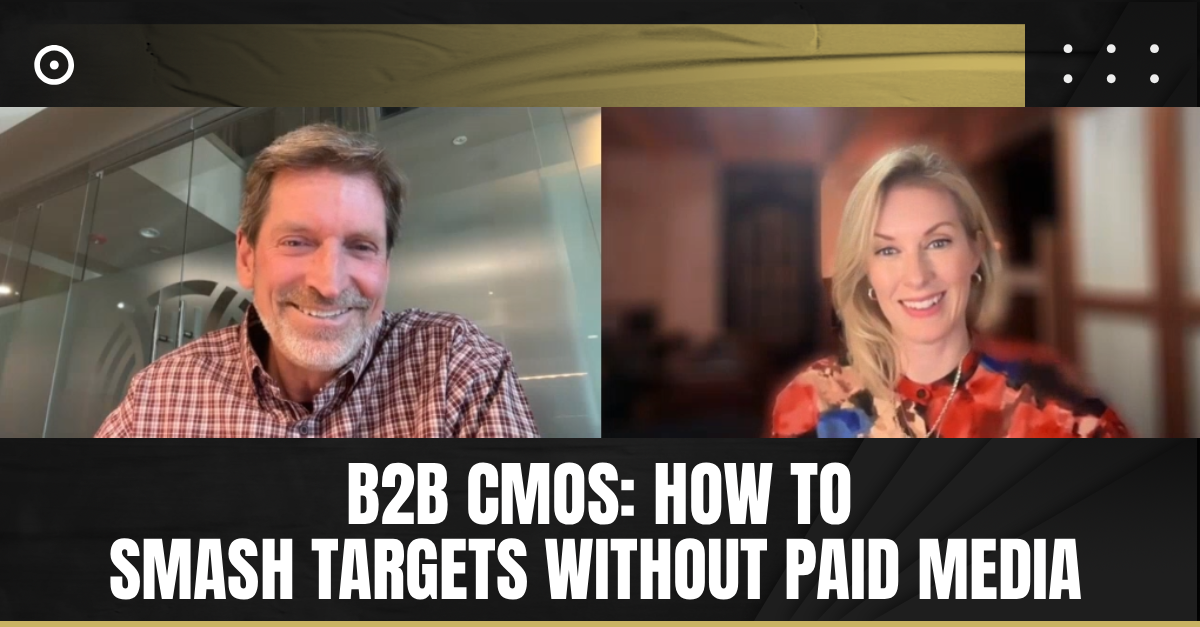
Stephanie Pilon, Chief Marketing Officer at Singular, shares how her team exceeded revenue targets without relying on paid media. She explains why long sales cycles and niche ICPs reduce the effectiveness of paid channels in B2B. Stephanie also walks through data-backed decisions that drove a strategic shift away from ads. Her approach shows how focus, alignment, and execution outperform spend.
“Start looking at your data and begin understanding the commonalities between the deals you’re winning. Start reverse-engineering those patterns, because that’s how you’ll develop your scoring model. That’s how you’ll figure out which signals will lead you to fresh deals down the road.” – Stephanie Pilon
In this episode, Stephanie breaks down how B2B CMOs can rethink growth by shifting attention away from paid channels and toward customer insight, internal alignment, and signal-based execution. She explains how partnerships, precision outbound, and disciplined data analysis create a more predictable pipeline and help marketing earn credibility with sales teams, executives, and boards.
Follow Stephanie Pilon on LinkedIn
Follow Steve MacDonald on LinkedIn
[Transcript]
[00:00:05] Steve MacDonald: Welcome to the C-Suite Sales and Marketing Perspectives podcast. I’m Steve MacDonald, your host, and today we have on a really special guest and a topic out of, I think we’re at like 250 episodes, that we’ve never dived into in a deep fashion, and we’re gonna do that today. We’re gonna talk about how you can just smash your targets, and this is what Stephanie Pilon, who is the Chief Marketing Officer at Singular, is gonna talk about here today, without paid media.
[00:00:33] Steve MacDonald: So we all know that we have to have a balance, right? And that in a lot of ways, for all of us as B2B marketers that are in a B2B motion, that we’ve seen returns diminish in our paid media, and that we have to think about new ways that we’re approaching the market and carving out our space. And that’s what we’re gonna be talking about here today.
[00:00:53] Steve MacDonald: Now Stephanie, I know also you’ve got a great background. You started out in sales, right? And so in terms of a mindset, in terms of a CMO and a marketer and how you’re enabling the wholesale motion, that’s gonna be a part of what we talk about here today, right? You also a big product marketer. But just the fact.
[00:01:12] Steve MacDonald: You are smashing your targets and you’re going in front of the board and you’re saying, here’s what our goals, here’s what we achieved, and you did it all without paid media. I think that’s just a major accomplishment. So I’d love to hear a little bit more about your background before we get started, if you don’t mind.
[00:01:29] Stephanie Pilon: Thanks so much, Steve. So actually, yeah, I grew up in sales, which I think is an interesting thing to end up in marketing at the end, but I was the only sales person that was really interested in researching the customer. So actually, from research, did I go over to product marketing and then ultimately leading marketing division, which I find incredibly exciting, and still really working closely with sales, of course, and also with our customers.
[00:01:54] Stephanie Pilon: I think it’s interesting that we’re having this conversation where I’m saying like, hey, paid marketing, do you really need it for what we’re doing, where our customers are absolutely using paid marketing.
[00:02:03] Stephanie Pilon: So actually, Singular is an end-to-end measurement platform for marketers who are usually marketing an app. So it’s really measuring mobile app performance, and of course, there we’re partnering with big companies who are doing paid marketing. And I’m sitting here saying, from a B2B marketing perspective, that maybe it’s not as necessary as we thought it was.
[00:02:23] Steve MacDonald: Well, I love it. I love that you framed that. Thank you for doing that. Here’s what I want to do. I want to get right in and just talk like why paid media isn’t the growth lever that it used to be.
[00:02:34] Stephanie Pilon: Okay, well I think paid media can still work in a lot of instances, and I don’t wanna have this like blanket statement that it doesn’t work, because I think it really depends on what you’re after.
[00:02:43] Stephanie Pilon: I think for B2C it’s fantastic. I think all of us have just gone through our Black Friday Cyber Monday, and I’m sure we’ve clicked on some emails that came through. Or maybe if you’re on social media, you’re seeing all the ads that are popping up and it’s prompting you to shop. But when it comes to B2B, and especially in the industry that I am in, where the ICP is pretty specialized, the TAM is not as big as we would probably want it to be.
[00:03:09] Stephanie Pilon: And it’s a long sales cycle. So you’re not really getting that instantaneous click that you might get from paid media, and it’s gonna convert into something really quickly. So it is a long game that we’re talking about. And paid media to me is a bit of a black box where you can test things out, but the return is just not there.
[00:03:28] Stephanie Pilon: And when I’ve compared it using reams of data over many years, so think of, I don’t know, dozens or more than a dozen quarters worth of data, it just wasn’t backing out. So this is really why we’ve had some pivotal shifts, and we’re not really focusing on paid media as a channel as it was within our business.
[00:03:48] Steve MacDonald: I love how you talk about that as a channel, because in our last conversations you talked about how you and your team and the tools that you use are the channel.
[00:03:58] Stephanie Pilon: Absolutely. Yeah.
[00:04:01] Steve MacDonald: Well, tell us a little bit about that.
[00:04:02] Stephanie Pilon: Yeah, I think that’s interesting, ’cause, you know, how we’re framing it is, you know, when you’re looking at the cost of acquiring a customer, right?
[00:04:08] Stephanie Pilon: You’re looking at all the different costs that are in there. And with paid media, it can be quite a linear calculation. Where with us, we’re looking at the tooling. I’m looking at my people. We’re, we are the paid marketers, right? We’re being paid to go out and market and actually bring that pipeline through.
[00:04:23] Stephanie Pilon: So I think it’s really important that we have this distinction, that even though I might not be spending, you know, tens or dozens of thousands of dollars every day on Google or other platforms to bring in business, that we ourselves are paid and we’re doing a lot of work across a number of different interesting programs to actually target the ICP and get them through the door.
[00:04:47] Steve MacDonald: So if you could just give us some examples of what you’re talking about, because you made a comment that personally, as a B2B marketer, you don’t ever use paid media. This is the channel that you’re smashing the targets with. So if you wouldn’t mind, like give us some just examples of where you and your team spend a lot of time.
[00:05:08] Stephanie Pilon: Sure. I guess I would use it really loosely that we almost have free promotion. And what I mean by that is it’s not our customers, which that is great free promotion. We do have free promotion through our customers, but we have really tight programs with partners. So partnership programs are a fantastic way of us actually getting new leads through the door.
[00:05:29] Stephanie Pilon: And we’ve created an immense program with partnerships. So with that, that means that we might be doing big gated assets that we’re not doing paid promotion against, but we have big gated assets where we’re bringing in leads, but we partner with, you know, between five to 10 different partners to do distribution on those unpaid programs. We also have webinars that we do distribution with partners. So those are bringing in leads. And recently, we’ve started doing something that we call precision outbound. And what that is, is really taking a TAL, a Target Account List, enriching that with first, second, and third party data, and then figuring out, of that TAL, who is, for lack of a better term, our freshest fish that we should go try and fish.
[00:06:16] Stephanie Pilon: From the lagoon. So this is what we’re doing. And this list is given to the go-to-market team, and it’s really sort of a marriage of all of us to go after these accounts together.
[00:06:28] Steve MacDonald: And I know you’re like huge in looking at the data and then using automation tools. I know that you’re a big fan of Clay.
[00:06:36] Steve MacDonald: If you were to tell folks that are listening in here, the amount of data that we have today, it’s almost overwhelming. It’s more data than we’ve ever had before. But you’re using the data and these automation tools like Clay to really make sure those freshest, and, you know, nurturing those leads.
[00:06:56] Steve MacDonald: Tell us a little bit about how you’re using Clay and you’re using that data, if you don’t mind.
[00:07:01] Stephanie Pilon: Yeah, sure. So I’m sure all of us have different data points that we collect on our own. So you might be having what you might call your first party data that might come through HubSpot. For example, so you can see who’s landing on your site.
[00:07:13] Stephanie Pilon: You might have second party data or even third party data. So for our purposes, there are companies that we’re able to get really good third party data. So that could be things like, in my industry, like an SDK install. And it really depends, I think, highly on the industry you’re running in and what those signals could be.
[00:07:32] Stephanie Pilon: What we are able to do is we’re able to grade those signals. So we make a decision on a scoring model, if you will, on what we wanna allot to each one of those signals, if that signal is present, and then we apply that model dynamically within Clay. So Clay, I don’t even know how to describe it. I’m sure they do a better job of what I’m gonna do right now, but it’s basically, I think of it like the smartest Excel table you’ve ever imagined, because it’s plugging in.
[00:08:01] Stephanie Pilon: To all these different third party tools that then you can use to enrich your own data. So you might not need to have, for example, a subscription to a third party data aggregator. You could just do it all in Clay. So it’s as simple as starting to build a table with a bunch of companies, let’s say. Then you can fill in the right persona that you wanna go after, and then you can enrich it from there.
[00:08:28] Stephanie Pilon: And for us, we do that in Clay and then bring it back into Salesforce so that Salesforce remains our source of truth as a business.
[00:08:37] Steve MacDonald: And where do you do your automations from? Is it from Clay? Is it from another platform?
[00:08:43] Stephanie Pilon: Some of it runs in Clay, and then we also use Zapier and we also use n8n, so we’re maybe agnostic on where we’re doing things.
[00:08:51] Stephanie Pilon: I think in the next year we’ll probably have to make a decision of where we wanna run the majority of our automations, but for now, we’re sort of testing different tools at the moment to see what is best.
[00:09:02] Steve MacDonald: And the reason why I am like digging in so deep here is that when you’re talking about you and your team are the channel, it’s really you’re overseeing the system that you’re building here, from which data you’re collecting, how you’re aggregating it, how you’re scoring it, and then how you’re putting it into these automations and reaching out into the market, into that smaller market, right?
[00:09:27] Steve MacDonald: That ICP, that is really well defined. I love that. I think we could do a whole podcast just on that and what you’re doing here. But I’d also like to talk about this can be something that you are doing internally, in the marketing department, but you’ve gotta have.
[00:09:44] Steve MacDonald: Alignment across the organization, not only with sales, right, the rest of the C-suite, the board, and what you’re doing. And you talked about literally like needing to rebuild trust and KPIs and behaviors, and you actually changed a lot of your team over. You did a big job organizationally inside the company getting ready to implement this system. And so I’d love to hear your thoughts on what you did there.
[00:10:11] Stephanie Pilon: Sure. Yeah. So when I joined, I was actually the first ever CMO to be within the organization. They never had a senior person within the marketing department at that exec level. So that was big boots to fill, I think, as a number one. And I came in and I kind of had to right size things.
[00:10:29] Stephanie Pilon: So we were very heavy on product marketing, which, even though I come from product marketing, I could notice right away that we were quite heavy on that side and we weren’t as heavy, let’s say, on demand gen. So it really took some reorganization to make sure that we were focused heavily on the demand gen side, that we were actually building in all these automations and this sort of methodology on what we needed to do to take us to this next level.
[00:10:56] Stephanie Pilon: And actually just some of the more basic things like, you know, running nurture programs and things that had just never been done before. So really setting this new foundation that we can then build off of in the coming quarters. Actually, in 2026.
[00:11:09] Steve MacDonald: And you actually established new KPIs and you changed over team members. Why on both? Like what was important in this mix that you’re doing?
[00:11:21] Stephanie Pilon: So first of all, I think the KPIs were really, really important. I’m a humongous believer in OKRs, so I actually came in as the exec champion of OKRs to the business. So all of us now are working off OKRs, and I just find it a fantastic way to.
[00:11:37] Stephanie Pilon: Ground your team in what we need to be doing. And then it gives us the ability to say no as well, actually. So it can be quite a powerful tool of focus, and also of allowing people to say no to things that don’t fall into that rule set. That’s one thing. The second thing is I changed attribution internally.
[00:11:57] Stephanie Pilon: So no longer can we look at like 30 or 60 day cycles, knowing that a sales cycle is much longer. We needed a much longer window of attribution for the things that we were doing. For example, if we’re running an in-person event, which I think is a fantastic way of actually building pipeline, we needed, you know, between six to 12 months runway to actually realize some of that closed.
[00:12:23] Stephanie Pilon: One opportunity that can come from these events. And the other part was alignment within the organization. So actually aligning that GTM team on all of the things we’re doing, which I do believe OKRs help with that, because you’re having a shared goal actually amongst us on, you know, we wanna hit this pipeline, we wanna hit this revenue amount.
[00:12:43] Stephanie Pilon: Okay. How can we, as the leaders within the go-to-market operation, get there and instruct our team to get there.
[00:12:51] Steve MacDonald: And you did a lot of work in terms of you changed the team. You let people go, you brought new people in. Was that because there was some resistance on the team? They didn’t have the right skill sets? Because high performance teams are, you know, that’s what makes the huge difference in a business.
[00:13:07] Steve MacDonald: Right. So what is it about how you created your high performance team that you would want to share here?
[00:13:16] Stephanie Pilon: Really, it was right sizing. You know, it’s an unfortunate thing when you have to let people go, and it’s awful. And, you know, when you’re joining a company and you’re inheriting a team, unfortunately, you have to sometimes unwind some of the mistakes or some of the decisions that were made before you.
[00:13:31] Stephanie Pilon: So in this case, it was really right sizing from some sub-departments of marketing to ensure that I had the right budget and people budget, that I could bring more talent to the demand gen side and that more digital focused side, if you will. So things like GTM engineering, also demand gen, were really, really heavily focused, knowing that we need to do so much more with automation than we had before.
[00:13:58] Steve MacDonald: And if you could, inside of that team and then inside of the company in total, you and I talked about how important the culture is, right? Explain maybe a little bit your philosophy on the right culture that lets that team operate at its fastest and its best and most efficient and most productive.
[00:14:17] Stephanie Pilon: That’s a great question on what allows it to be the most productive. In my opinion, it’s one, having really tight goals so that we absolutely know what we need to do. Everyone is empowered to do the things that they need to do. I have hired, and some of the people that were already in place are, just absolute professionals.
[00:14:36] Stephanie Pilon: You know, we tend to hire A people, right? So we’re hiring people that absolutely know their domain. They’re not needing me to explain something to them. So they’re almost like coming back, you know, there’s this philosophy, right, that you’re supposed to hire people that are 10x-ing you in some way or.
[00:14:52] Stephanie Pilon: Adding value. So never hire the same person as you. You’re supposed to hire people that are looking around the corner, who know the blind spots before you know them. And this is really what we’ve developed within the marketing team now. So in terms of culture, it’s really about hiring the best people that we possibly can, that absolutely know their domain.
[00:15:13] Stephanie Pilon: And that they’re able to actually just do the job that they intended to do. So we’re not getting in their way. We’re unblocking them, we’re breaking down silos, we’re making sure that they feel empowered to do the best work that they possibly can. And I’m always telling them, you know, like, this is not the last job you’re ever gonna have.
[00:15:31] Stephanie Pilon: We all know that. Try and think of all the things we’re doing as CV building exercises. You know, these projects, when they’re successful, it’s fantastic. This is your story arc to the next job. So I really have that sort of way of managing and leading people versus micromanaging or even worse, you know, getting caught up in all the details.
[00:15:52] Steve MacDonald: You twice in there talked about empowered people. How do you empower them? Like, what’s the key to them feeling like I’m empowered to do what I think is right, what I think is best, collaborate with the team. Obviously get approvals, but how do you empower them?
[00:16:12] Stephanie Pilon: I think it’s giving them the ability to make decisions on their own, but knowing that I am there as a trusted advisor.
[00:16:19] Stephanie Pilon: For those decisions. I’m not the one that’s leading the decision at the end of the day, though I might be the one that’s signing off on the decision, but I’m really giving it to them to be in control of their domain. So in regards to demand gen, I wasn’t laying out like, this is your 90 day plan when I hired someone.
[00:16:38] Stephanie Pilon: This is exactly what I want you to do. I wanted them to come to me and analyze everything and then give me advice like, this is what we should do. Okay, great. Let’s go and do that. Now, what do you need in order to do that? How can I unblock that for you? What tools do you need versus the other way around? You know what I mean?
[00:16:55] Steve MacDonald: Yeah, I do. And in fact, I run a podcast in the HR and talent acquisition industry, and I’ve interviewed CTOs and CEOs and CFOs and all kinds of people, and CMOs on that podcast, Chief People Officers. One of the things that comes up consistently is that we can’t have our teams.
[00:17:15] Steve MacDonald: Be in fear of failing because it’s a natural part of trying something new and trying to push the envelope, right? And so I took that from what you were saying, just in different words, and I wanted to make sure that that was a correct interpretation of what you’re saying, is you’re asking them to envision and develop the plan and what to do, but at the same time, knowing that it’s not all gonna work and that’s okay. That’s all right.
[00:17:41] Stephanie Pilon: I believe that’s also part of like the philosophy of OKRs, right? You should never be achieving for a hundred percent. And in the beginning, actually, we were getting a hundred percent, or sometimes even 120 percent of our objective. And I quickly realized, you know, well, we should be getting 70 percent.
[00:17:57] Stephanie Pilon: That’s great. That’s A plus is 70 percent. And if we’re overachieving, that means we didn’t make it hard enough. And that goes in line with what you’re saying as well, that, you know, we shouldn’t be afraid to fail. 70 percent is not a fail. That’s really good, but a lot of people need to get a hundred percent. So it can be sort of hard to grapple with when you introduce this sort of new.
[00:18:20] Stephanie Pilon: Type of goal setting, that it’s okay to not be getting a hundred percent because you obviously know you’ve shot for the moon, you’re trying to get the craziest number, the craziest target you possibly can, and you’re working quickly and in an agile way to get it. So it’s not always gonna work out.
[00:18:36] Stephanie Pilon: It’s okay.
[00:18:38] Steve MacDonald: In fact, it’s designed into the system, right? Like you said, if we’re always hitting, then we just haven’t tried hard enough. I love the way you put that. I’m gonna use that in that other podcast. Thank you. You know, I want to go back to something that you said at the very beginning when you introduced yourself.
[00:18:53] Steve MacDonald: You said, you know, I started out in sales. I grew up in sales, but I was like the only sales person that really wanted to research the customer. Tell me just a little bit about the need to operationalize the voice of the customer, and that was such a significant part of the growth engine itself. What did you mean by that?
[00:19:11] Stephanie Pilon: I guess there’s a lot of parts to unpack there. And maybe I could talk a little bit about one of my first projects within this role, which was a repositioning project where it was really important for me to understand what it was we’re selling, which I do know, because I’ve worked at our competitor before.
[00:19:31] Stephanie Pilon: So I do know exactly what we’re selling, but position us in a specific way. And in order to do that, you really need to understand the customer. You really need to understand someone’s pain. You really need to understand the problem that you’re trying to solve for somebody. You know, when you’re selling them something, why should I buy this?
[00:19:51] Stephanie Pilon: How is this gonna help me? And I think there’s this adage that it’s either, you know, saving money, making money, or saving time, right? That those are the three things, and you really need to go beyond that and really understand what it is that you’re helping somebody with. And so during this exercise, you know, we’re talking to a lot of customers.
[00:20:09] Stephanie Pilon: Fortunately, we have Gong, so we have access to like a ton of call logs, but that’s not perfect either. I think you get a lot more out of having really one-to-one qualitative interviews with people. So an exercise that we also did was they sent out emails to everyone asking to have conversations.
[00:20:29] Stephanie Pilon: And I ended up speaking to a number of lapsed accounts, so people that had decided not to work with us any longer, as well as people that had never decided to work with us, to really understand why not. What could we have been doing differently? How do we solve this? So these things like getting in front of the customer and getting that early feedback are tantamount to be able for us to have the right content, the right messaging on our website, that right go-to-market motion that we need to have in order to increase our revenue and ultimately grow faster.
[00:21:05] Steve MacDonald: So voice of the customer. There was a McKinsey study that came out from 2023, and it said that it’s not only the greatest opportunity for ideation and innovation, but that less than 15 percent of companies actually execute well on a voice of the customer program. Yet none of those companies, nobody I’ve ever talked to, would say we’re not customer focused.
[00:21:35] Steve MacDonald: We’re not customer first. We’re all customer obsessed, right? We all say that we are, but what you’re talking about there is actually saying, okay, I’m gonna be very proactive about that. And Gong recordings from sales can be great, but those are conversations where, and I’m not talking about your sales team, but Gong did a big study and they said that the sales rep talks two thirds to three quarters of the time, and then when the prospect talks, they’re reflecting back on what the sales person was talking about.
[00:22:06] Steve MacDonald: So it’s a big product conversation really that’s happening, and there’s a shield. You’re being sold to, right? You’re not opening up. And then customer success conversations are important too, but the number one goal in customer success is to cross sell and upsell. My personal belief, and I’d love to get your thoughts on this, is that most companies use those sales conversations, those customer success conversations, within the end or sales conversations to.
[00:22:35] Steve MacDonald: Create familiarity with our prospects and our customers, and they substitute that for the voice of the customer, right? Maybe NPS scores, surveys, and things like that. But that deep ongoing conversations that you’re talking about, the one-on-one conversations, I think that’s where the magic really happens.
[00:22:55] Steve MacDonald: So I just wanted to like, how important is operationalizing voice of the customer, like so that you’re having those conversations on a regular basis.
[00:23:06] Stephanie Pilon: I mean, I think it’s incredibly important. So we’re continuing to run the motion that I just told you about, where we’re talking to our lapsed, or, you know, never customers, the customers that we wish we had.
[00:23:15] Stephanie Pilon: Right. We actually created like an internal sort of process that we’re calling our six figure club, for lack of a better term, where we have all of our biggest accounts and execs are assigned to all of these accounts. And what this is doing is really allowing us to have different conversations.
[00:23:31] Stephanie Pilon: With these accounts. I’m a marketer, as you know, as I’m here, and who we sell to are actually marketers. So it’s really, really nice to go marketer to marketer and have really honest conversation about how the business is going, the goals that they might be having. And maybe I could liken it to that thing where, you know, you have a good cop, bad cop.
[00:23:52] Stephanie Pilon: So not to say that sales and CS are the bad cop, but I can come in in a different angle than they can a lot of the time. And one of my favorite things to do, actually, is to ask, it’s probably like a producty thing, where I’m like, hey, walk me through your day. Like, gimme your jobs to be done in the day.
[00:24:00] Stephanie Pilon: I really wanna understand what you’re working on, how you work, how you go through the dashboard, what type of reports are you looking at? Like, really to understand how they’re using our product, which then allows me to unlock different value in that next conversation.
[00:24:25] Steve MacDonald: So to add to that, there was a woman on the podcast, and her name’s Efrat Ravid, and she’s a three time B2B CMO. She’s also a Value Accelerator advisor with Goldman Sachs, and her perspective was exactly like yours.
[00:24:42] Steve MacDonald: She said, we should be spending no less than 20 percent of our time just talking to customers. And if we don’t prioritize it at that level, we’re not doing our job. Also, at the same time, Gartner, McKinsey, Forrester, Deloitte have all said that the CMO should take the mantle on as the Chief Customer Officer, right?
[00:25:05] Steve MacDonald: Like most B2B companies, there’s not one person. There’s really in charge of the voice of the customer, right? We all kind of have conversations, we all have it in our head, but then turning that into something that we can execute on, that we can actually use to drive our entire pipeline is a very different thing.
[00:25:27] Steve MacDonald: And this is the last thing I’ll say from another person. I wanna have you reflect on it. She was a three time B2B CMO who came on the podcast. She was a CMO at IBM, Cisco, GE, ran a customer program globally at Nielsen IQ, and she said, Steve, when she came on the podcast, she goes, I just wanna talk about one thing.
[00:25:46] Steve MacDonald: And I’m like, okay, what would that be? And she said, the lack of execution. It’s where all good strategy goes to die. If the voice of the customer is that important, how do you take it out of your head, the other executives’ head, right? How does it make it into the teams and execution in the pipeline? How do you execute on it?
[00:26:08] Stephanie Pilon: That’s such a big question. So how do you operationalize, I guess, the voice of the customer, so everything that you’re learning and then put that into a strategy, but still execute on the strategy, which I think is a really important thing.
[00:26:22] Stephanie Pilon: It can’t just be a pretty slide that we’re talking about and saying, oh good, this year we’re gonna have the voice of the customer and we’re gonna make sure we do it. So I think there’s a number of ways, and I think we’re very lucky that we’re marketers. When you’re in marketing, what do you do?
[00:26:35] Stephanie Pilon: You’re actually creating a lot of copy. You’re creating a lot of content, and you’re trying to engage that audience in some way and move them through a funnel in some way. And when we think of a funnel, I mean, I never think of a traditional funnel, by the way. I’m not that old school where I’m like drawing a funnel and thinking about the stages.
[00:26:51] Stephanie Pilon: But in any case, there’s different messages and there’s different ways that you’re gonna want to bring people through to discover your product and understand. And I think understanding, if we go back to the, like, the fundamental part of your customer, where your future customer is really understanding them at a very deep, empathetic level, you’re then able to communicate properly to them. And it’s not, you know, the sales part is probably on sales enablement, right?
[00:27:18] Stephanie Pilon: How do we get better at doing discovery? What are the three value selling things that we wanna get across on every single call? How do we not bore people on a demo? How do we get to the things that really matter to them and distill it down so that it becomes exciting during a demo? And all this actually starts in marketing.
[00:27:36] Stephanie Pilon: If that’s how your marketing team is operating. So, you know, sales enablement is usually sitting with product marketing from a content and messaging point of view. That’s also product marketing and maybe your integrated marketing. So we have the power within marketing to harness all of the information that we’re getting from voice of the customer and then turn that into the programs that we’re running quarter on quarter.
[00:27:59] Stephanie Pilon: You can have the same program. You can have your programs, like your events and your partnerships and content and your outbound, and then you might be just refining that message as you’re learning along the way from that qualitative and quantitative feedback that you’re gathering from your customers.
[00:28:15] Steve MacDonald: That could be an hour long conversation, just that right there. Here’s what I’d love to do is we’ve talked about so much here, and our poor human brains, we can only remember a few things at a time. What would be like the most important thing that you would want other CMOs, CROs, CEOs, primarily of B2B companies that are in an ABM motion.
[00:28:38] Steve MacDonald: What would you want them to take away from today’s conversation?
[00:28:43] Stephanie Pilon: Maybe you need to do it in your business. Not everyone is so lucky that they have deep partnerships and they can do different distribution and think about things in different ways.
[00:28:51] Stephanie Pilon: But what I would say is that you in a company, whoever you are, you sit on a lot of data. So start with that data. Start looking at that data, start understanding what are the commonalities between the deals that you’re winning. Start reverse engineering that, because that is how you’re gonna develop that scoring model.
[00:29:10] Stephanie Pilon: That is how you’re gonna figure out what signals will lead you to that fresh deal down the road. And until you have that right, I mean, it is just not gonna work out for you. You’re kind of being flying blind and throwing money at things that are not gonna be converting in the same way. When you get to a place where you understand your customer so well, going back to the voice of the customer, you understand what makes them want to buy and at what time.
[00:29:38] Stephanie Pilon: ‘Cause time, especially in SaaS, is of the essence. You know, we’re looking at like two year lock in periods, sometimes three year lock in periods. So it really is about finding that signal and then using that signal to your advantage as much as you possibly can, using the tools that you have at your disposal.
[00:29:57] Steve MacDonald: Stephanie, I know one thing. There’s gonna be people that have questions here, that’s for sure. Is it okay that I give out a link to your LinkedIn profile that people could reach out to you if they had questions?
[00:30:07] Stephanie Pilon: Sure. Absolutely.
[00:30:09] Steve MacDonald: Well, good. So here’s the deal. This whole podcast, the mission is to bring C-suite executives together and share what’s working, what’s not working, what are we doing, you know, what’s not working well, what trends and what opportunities we have.
[00:30:23] Steve MacDonald: And if we do that, we share from the different insights and perspectives and experiences that we have. I call that the rising tide that lifts all boats, and you were an amazing part of that rising tide today. So I just wanted to say thank you for coming on.
[00:30:37] Stephanie Pilon: Thank you so much for having me. It has been an absolute blast to talk about all these nerdy data things and also nerdy things like talking to our customers.