
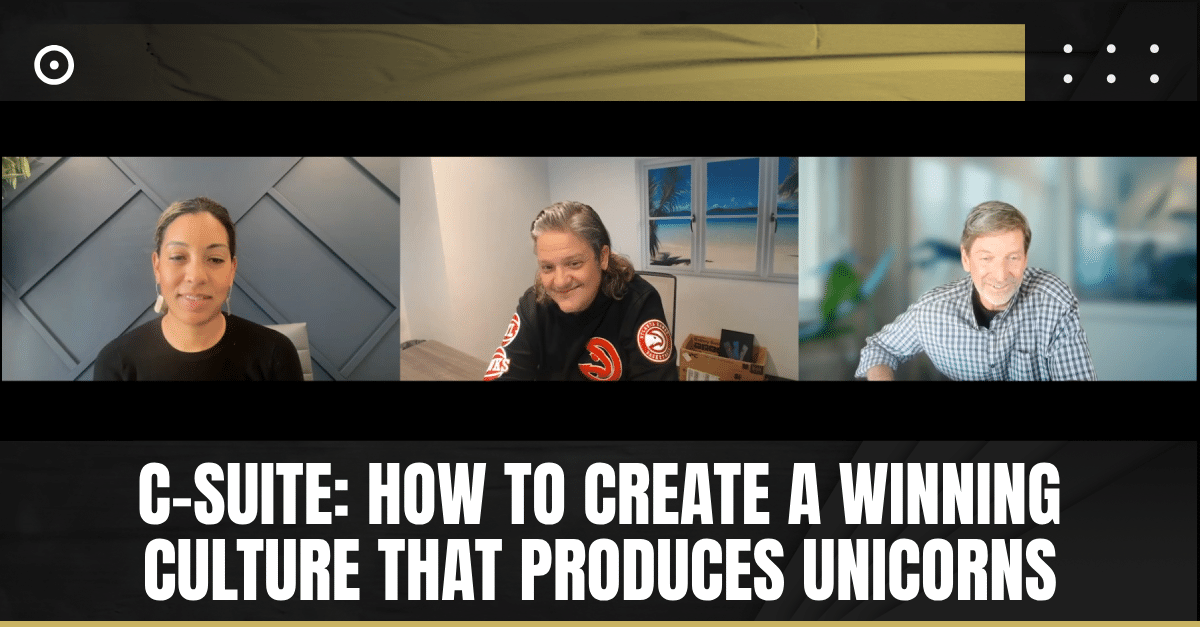


Jamie Walker, CMO of Keyfactor, and Dan Michael, CSO of Keyfactor, share how a strong company culture drives growth, retention, and performance. They explore their synergistic leadership and strategies for building unicorn companies. Additionally, they discuss the Chief Transformation Officer’s role in aligning strategy and process.
“Culture is about showing up day to day. It’s how you show up, how you ask your people to show up, and what you stand for. You want your people, who live and breathe your core values, to be in front of your customers, ensuring they speak on behalf of your company.” – Jamie Walker
Cultivating a strong company culture aligned with performance goals is crucial for success. Jamie and Dan emphasize engaging employees in cultural design, promoting core values, and the role of a Chief Transformation Officer in managing change. This highlights the deep connection between employee and customer experience as a driver of growth.
Follow Jamie Walker on LinkedIn
Follow Dan Michael on LinkedIn
Follow host Steve MacDonald on LinkedIn
[Transcript]
[00:00:00] Steve MacDonald: Welcome everyone to the C-Suite Sales and Marketing Perspectives Podcast. I’m Steve MacDonald, your host. Today, we’re going to have a lively, informative conversation. We’re going to have a phenomenal conversation with Jamie Walker, who is the Chief Marketing Officer at Keyfactor and Dan Michael, who is the Chief Sales Officer.
[00:00:22] Steve MacDonald: Now I’m going to say a couple of things. One is that you guys call yourselves Batman and Robin. I’m going to let you guys determine who is Batman and who’s Robin. But, Dan, I know you’ve been involved in three unicorn companies. You’ve built companies up to a hundred million and more in sales, and you’ve got a really strong, along with you, Jamie, very strong perspective on what creates that kind of success.
[00:00:47] Steve MacDonald: That’s what we’re going to be talking about today, specifically how to create a winning culture that produces unicorns. But before we get into that, Jamie, maybe I’ll let you kick off and maybe just explain a little bit more about your background before we get started.
[00:01:02] Jamie Walker: Absolutely. Steve, thanks so much for having me and my partner in crime, Dan. So yes, my name is Jamie Walker. I’m the CMO of Keyfactor. I’ve been here for almost five years. In a very high-growth company prior to Keyfactor, I’ve worked for a few different kinds of software startups here out of Atlanta. I’ve been in marketing for over 17 years. I hate to say that because it ages me a little bit. But yeah, I would say Keyfactor is definitely my first unicorn of success. And there’s a lot of lessons learned and information that I’m just excited to talk to you about, Steve, and I wouldn’t be here without my partner in crime, Dan. So I think there’s a lot of fun stuff we can share today.
[00:01:37] Steve MacDonald: All right, Dan, how about you?
[00:01:39] Dan Michael: Sure. Dan Michael, like I said, I’m Chief Sales Officer. I’ve been here over five years, a little bit over five years. It’s been fun to watch the journey here. We’re about a $7 million company, I believe, when I started, and we’re over a hundred million on our way to 250 by the end of 2026.
[00:01:56] Dan Michael: So we’re doing very well over here. My last couple of companies before this, I was part of the foundational sales teams at both, and they both IPO. That was great. I have seen a lot when it comes to how to build a winning culture, and I’m excited to be sitting here and talking to you all day.
[00:02:11] Steve MacDonald: Fantastic. So I’m going to start with this. Who’s Batman? Who’s Robin?
[00:02:14] Dan Michael: She’s Batman. I don’t gotta be Batman.
[00:02:16] Jamie Walker: You got to tell the story a little bit. You got to tell the story of how we got here. Cause I feel like it’s funny, Dan. I feel like we were at a C-staff offsite. It was an important meeting, but it wasn’t like an all-company meeting.
[00:02:26] Jamie Walker: Dan comes out and he’s, yeah, she’s my partner. We’re Batman and Robin, and we both, everyone kind of chuckles. Then, he sends me this side message. He’s, oh, by the way, you’re Batman. And I said, oh, don’t worry. I know.
[00:02:37] Steve MacDonald: Oh, I love it. All right, I’ll let whoever wants to answer this first, but if we could define just why you think culture is such an important ingredient to creating success, to creating unicorns. I’ll let Batman or Robin take the lead.
[00:02:53] Jamie Walker: Yeah, I think culture is such an important part of being part of something bigger. I mean, we’re all individuals that are in a company, but we’re all here to be part of a group and be part of something that we believe in and that is going to have success in the end. So, culture is one of those things, you can’t touch it. You can’t feel it. It’s ingrained in your soul, and you have to create that. Specifically at Keyfactor, Steve, I think you were talking earlier, maybe before we started, on core values. Sometimes, are they just something that is typed out or on a banner?
[00:03:22] Jamie Walker: I think for Keyfactor, this is the one company I’ve been at where core values are lived and breathed and part of kind of everything we do, I would say on a daily, weekly, monthly basis. They’re reinforced by all different levels of the business. So I think that’s important. But it’s also, I think culture is really, for me, I like transparency in what we are doing, why we are doing it, and how we are going to get there. And I think one thing that’s been great about the leadership at Keyfactor is that they’re very transparent about what our goals are, how we need to get there, and what it’s going to take to get there.
[00:03:52] Jamie Walker: So, those are the things where if you have transparency and you’re living and breathing a culture that people believe in, then people feel like they’re part of a bigger story and that their contributions are going beyond just their day-to-day work.
[00:04:05] Dan Michael: I would say the thing I would add to that is that it’s important that it doesn’t get pushed down from the ivory tower. No one cares that the CEO says our culture is X, Y, Z. Comply. That’ll be disregarded. You won’t get the uptake you need from the people in your company. So what we did here that I thought was pretty awesome was we did a series of surveys and interviews around the company, and the company built our core values.
[00:04:30] Dan Michael: It didn’t come from me. It didn’t come from Jamie. It didn’t come from the C-suite. It came from the people saying what’s important to them and the kind of culture that they want in the business. And I would add that culture is very important to a winning team, but so is winning. So like having a great culture of losers, no one cares about either.
[00:04:47] Dan Michael: So how do you balance being a high-performance culture based on winning with all the things that you said about caring about our people and taking care of them and doing the right thing? None of these are actual values, by the way, but I think that kind of underpins some of them. But it’s important to denote that it’s not just about having a great culture, so we can hang out around and hug each other and tell us all how great our culture is. It’s for the purpose of winning and the purpose of taking care of our people.
[00:05:12] Steve MacDonald: I’m going to put together a small train of thought, then ask you about this, cause I actually interviewed a Chief People Officer and the gentleman was a PhD in HR. Didn’t know you could get a PhD in HR, but he actually scientifically proved that a company culture that engages employees creates an employee experience that translates into a customer experience that translates into success. So that’s kind of the PhD quick and easy thought process on it. What I’d love to hear from you guys is, yes, culture is important. Tell me practically, how does it impact your business? How does it change things day to day? How does it impact the team and how you work together and how you achieve success?
[00:05:58] Dan Michael: You want to take the first stop again, Batman, or should I go first?
[00:06:01] Jamie Walker: I’m going to let Robin go this time.
[00:06:02] Dan Michael: So how does it impact the team on a day-to-day basis? So I would say it causes people to rethink maybe what their next move is or what they’re going to say next in a situation. It causes people to not hire individuals that don’t match our core values, no matter how good they are. It causes you to move out individuals who spit in the face of our culture, no matter how good they are. If you stick to culture as your North Star, along with winning, a winning culture and winning as the North Star, you start to see the rest of the organization coalesce around that. They don’t get upset when that jerk is no longer here or when changes happen that make the culture better. The core people who are winning for you will see that as positive. So I think it does a lot. It informs what we’re going to, how we’re going to behave.
[00:06:56] Dan Michael: It informs how fast we reply to things. If somebody needs something, it doesn’t matter what department it’s in, there’s no one in this organization that says, that’s not my job. If somebody asks for something, you have 100 resources trying to help you. I think that’s built over time brick by brick by sticking to your culture and adhering to it, even when it hurts. I’m going to let go of my top guy. I’ve let go of the number two sales producer here before because they didn’t. Number two in the whole company, let go of them because they hurt our culture. It’s having to stick with that type of stuff.
[00:07:26] Steve MacDonald: You’re not only embodying and living it, but you’re demonstrating to the rest of the company at the same time. When you get rid of a number two producer, you’re like, this is how important this culture is. You’ve just made a massive statement. What’s it like to you in terms of practically, how does this impact day to day?
[00:07:44] Jamie Walker: Yeah, I think, from day-to-day, it’s how you show up. Your culture is how you show up, how you ask your people to show up, what you stand for. And I think before you were talking about the PhD and the cycle of how it affects the experience to the customer.
[00:07:59] Jamie Walker: When I think that, I’m up funnel, Dan’s down funnel. And then there goes around after the sales and back to marketing. When you think about the customer, you want your people who live and breathe your core values to be in front of your customers. You want to make sure that they’re speaking on behalf of, they are speaking on behalf of your company.
[00:08:16] Jamie Walker: They’re speaking on behalf of me, Dan, our CEO, when they’re talking about any conversation they’re having. So you need to be particular around who you want those people to be. And they need to know what Keyfactor stands for and what we don’t stand for and why we are doing the things we’re doing and being able to explain that to a customer in an appropriate way.
[00:08:36] Jamie Walker: I would say, from Dan’s example, Dan and I have to lead by example, and we have to lead through our core values. And so he has some very, I would say, cutthroat examples of how that’s the hard part of it. And then there’s the nice and sweet part about it where, the times where we do get to promote within, and these are the stewards of our business because they’ve shown, and I think even on our review cycle, Dan, like when we go to our 360s, it’s around someone’s performance, but there’s a giant section around how they show up and live and breathe.
[00:09:04] Jamie Walker: We have to go back and recall examples and really rate them on, I think, a one to five and how they show up to all of our core values, and so that’s the joy. I would say on the part of, the more you can get your people to instill what it takes to continue to grow within the company and also be conduits of the core values, then you start getting more like people who are doing more of the same things and living and breathing what we’re doing.
[00:09:28] Jamie Walker: I think that ultimately, although I’m not necessarily customer-facing in most of my role, that the people, they’re the ones we want on the front lines. And Dan, your team is all on the front lines speaking to future customers. And so we need to make sure that they’re representing the business and they’re doing it in the way that we want them to.
[00:09:42] Jamie Walker: Otherwise, it’s a poor reflection on all of us.
[00:09:44] Steve MacDonald: So you said a lot of really important things there, but you actually use your core values in your culture, and you rate and you hold people accountable. Did I take that away correctly?
[00:09:56] Jamie Walker: That is absolutely correct.
[00:09:58] Steve MacDonald: How does that look? What does it look like on a regular basis?
[00:10:02] Jamie Walker: On an annual basis when we do our review cycles. I’m trying to think of other places where we have the Keyfactor contributor. We have monthly employee awards where we nominate people who embody the core values and are great performers.
[00:10:15] Jamie Walker: I believe it has changed over time. And that’s the one thing about culture is it’s fluid. It’s not static. Dan talks about how the people here created our values. We’ve also evolved our values as this business is changing and how we’ve gone through M&A. And it’s not just what our CEO says, we vote on.
[00:10:32] Jamie Walker: Do we still believe we’re here? Do we need to add another value? We’ve added value to our core value set since I’ve been here. So I forget the point I was making, but I think that what I’d like to share is that it evolves, and that it’s through the review cycle, and it’s through the monthly. How we recognize top performers and talent across the business at our monthly all-hands, where a lot of people get to nominate people on their team that they feel are high performers, and it gets back to a group of, I think, ELC members and a [00:11:00] large group where we vote on who we feel should be the key contributor of the month.
[00:11:03] Jamie Walker: So it comes out in many different ways over time.
[00:11:06] Steve MacDonald: So Dan, I have an interesting question for you. You used to be the Director of Strategic Planning for the agency for Mazda Motors of America. We used to give people Miatas, let them drive them for a month, and then we’d take them away. It’s called a deprivation study and it’s amazing what you learn.
[00:11:23] Steve MacDonald: If I were to take this culture that you’ve just been talking about here, I would take that culture away from this company and replace it with just the typical culture, that really, there is no culture. It just drives itself. And we’ve all been in those kinds of companies before. What changes day one, if I had to take away this culture and replace it with a traditional culture?
[00:11:45] Dan Michael: Results change day one, and at the end of the day, that’s what’s most important for a business: results and culture. But the culture brings the results. So if we lose the culture, we’re going to lose the results right out of the gate, which is obviously a problem.
[00:11:59] Steve MacDonald: One of the things that you mentioned in one of our previous conversations was just an amazing retention rate that you attributed, in large part, to this culture that you have on your team.
[00:12:08] Steve MacDonald: Talk to me about that and why that’s so important.
[00:12:11] Dan Michael: I think it’s pretty well known that in sales, the average tenure of a sales rep is about 18 months, sometimes less depending on what’s going on. I will say that we’ve only had two voluntary exits from my sales organization or my SE organization, or my SDR organization—a total of two in five years.
[00:12:31] Dan Michael: That doesn’t mean we haven’t had to move some people out for different reasons or whatever, but somebody raised their hand and self-selected to not be on the boat anymore twice in five years. People want to be here. We’ve got a great culture. We’re winning. People are making money. We’re having fun.
[00:12:45] Dan Michael: They’re valued. We also expect results with all the rest of that, but we do it in a way that is for the betterment of all.
[00:12:53] Steve MacDonald: Jamie, if I took the culture away today, what would happen?
[00:12:56] Jamie Walker: You’d have a lot of unmotivated people who would not reproduce results. Is what I would say from my perspective. Retention and marketing is a bit different than retention and sales. I would say. My retention has been strong from the involuntary versus the voluntary. The voluntary has been few, far in between, and it’s for a life shift. I want to go do a passion and passion for something that doesn’t matter how much you pay me or what I do.
[00:13:21] Jamie Walker: I just have a passion, and it’s not in the cybersecurity market. But I would attribute my retention cause Dan and I, we always say we have A players. You need to keep A players. You got to get A players. You have to keep them. And to keep A players, you need to, for my team, we’re creating as we’re growing year over year, we get to create experiences.
[00:13:38] Jamie Walker: We get to create new programs, and for marketing people, that’s really exciting because we’re creative, and we like to see something evolve. And I think, and we have a lot of passion in what we do. And so I think the newness of when we get to create year over year. When I hear some of my leaders tell me, like, when we were talking about, okay, what do I have to worry about you leaving?
[00:13:56] Jamie Walker: What’s going on here? They’re like, I’m having fun. I’m doing new things. If you have high performers, especially in marketing, then we do a lot of testing and iteration, or we add new functions under the high-performing leaders that can take on more, and so there’s just more opportunity. I think Dan spoke to that. Everyone knows the opportunity in front of them with Keyfactor. We’re all in a culture where we know what direction we’re heading into and what our why is. People want to be part of that success. We have people like Dan who have been and lived and breathed that. So we know when you say I’ve been through three unicorns, I’ve been through three exits, or we talk about successes, Dan, we’ve been together.
[00:14:34] Jamie Walker: When you’ve seen the fruits of your labor from prior experience come to fruition, it’s like, this is why we do it. We want to be part of something bigger, and we want to have new results and, you know, maybe some more dollars in our pockets at a later date, and that’s also when we hire people. You want to hire people that are self-motivated and that just want to be part of something bigger, and you can’t create that in someone. You have to find that innate, like just the core of who someone is, why they go to work, why they show up, and what they’re looking for.
[00:15:00] Jamie Walker: And that’s kind of, we hire a talent who fits into the mindset of where we want to go. I think the other thing Dan, I know he does, and I do work very transparently in our hiring practice about what it’s like to be here, what the expectation is, the fun that we have along the way, and, as Dan will always say, the results that we bring.
[00:15:15] Jamie Walker: If we didn’t bring results, Dan and I would not be sitting here right now. I’m here, and I preach to my team, we’re here to be part of something bigger. We got to put in the work to get there and although I’m an ex-basketball player, and it’s, you look at a season, you want to win the championship. We create our own championship every year. And it’s on a bookings number, it’s on a target, and we are marching towards that. And we were figuring out how to rally around and support and do whatever we can to get there. That’s my answer.
[00:15:41] Steve MacDonald: From one of the previous conversations, there was a notion that business growth is a Darwinian process, survival of the fittest. Dan, what does that mean?
[00:15:51] Dan Michael: That just means that it is a zero-sum game at the end of the day, you win, lose. And it’s one of the things I love about it, like when I was a high school wrestler or whatever, and that’s why I love that sport.
[00:16:02] Dan Michael: We either won or lost. There was no politics involved. You couldn’t talk to the coach your way into a starting role. You just had it done. And I run my sales organization, my SDR team, the exact same way. The best get promoted every single time, and my mid-enterprise segment here, which is our first hire outside of sales development, is 90 percent of the people who did sales development here. Our enterprise segment is full of people who were promoted out of the mid-enterprise segment, our globals are all people that were promoted out of the enterprise segment. While we certainly do hire from outside, inside, we hire a lot more at the SDR layer. Build them up in our culture and processes and our winning techniques and then move them up and in so much as there isn’t someone sitting there knocking on the door for that next job, that would be the time that I go look outside the org.
[00:16:54] Dan Michael: But doing that, setting up a Darwinian kind of a promotion process based on the cream rising to the top and those that earned it getting it, builds a team where they respect it every time it happens. They might be upset they didn’t get it themselves, but they can’t argue it, and they respect it.
[00:17:12] Dan Michael: It doesn’t put doubt in anyone’s mind or disenfranchise people when they see the best get promoted. Also, when there’s that guy on the court that just keeps running down the court and bouncing the ball off of his foot and can’t seem to tie his shoelaces and tripping over his legs and just can’t keep up with the rest of the team, when we cut that person from the team, same thing.
[00:17:34] Dan Michael: The team doesn’t look at that as a problem. The team looks at that with respect. We’re here to win championships and be wonderful people, but they’re not playing ball with the rest of us. So keeping it focused on winning, keeping it focused on the best being rewarded, I believe, yes, that’s Darwinian.
[00:17:53] Dan Michael: Sales is Darwinian. It’s a one-or-zero. You either won, or you lost, and there’s purity in it. If you lean into it, into that purity, people do respect it, and the best will come to work for you.
[00:18:04] Steve MacDonald: That’s one of the things that I think attracts the best people, but attracts the right people and has culture played into attracting talent that doesn’t know what the culture is other than what they’ve been told. Is that a part of the recruitment process and is that important?
[00:18:22] Dan Michael: Culture is absolutely part of the recruitment process, but I will also say that people have to experience it themselves because there’s a lot of it. I’ve had people that have come to work here and take huge pay cuts and salary because when they heard about Keyfactor that may be heard about me through the grapevine from somebody that they know or directly and taken 20, 25 percent hits on their salary to come work here because when they’re in the interview process, they see it.
[00:18:50] Dan Michael: It’s just evident from as soon as you start talking to multiple people around here in an interview process, we look different than others when they’re going through that process. And people end up wanting to work here. So yeah, I’ve seen it attract the right people, not only attract the right people, but attract them at a price point that the business can consume too, at a cost that the business can consume too, because people just want that to work for people that are winning. And that they like in a positive culture.
[00:19:20] Steve MacDonald: Jamie, what do you think?
[00:19:21] Jamie Walker: No, I definitely agree with what Dan is saying. I take survival of the fittest and like many different layers and forms, and it’s a bit different.
[00:19:29] Jamie Walker: Dan has so many ways for people to grow. And like you said, it’s transparent. There’s ways to move up. There’s ways to move across. And performance is what drives those decisions. I would say in marketing. I do think that our performance does bring candidates in from the recruitment process.
[00:19:45] Jamie Walker: I have people I talk to when I’m hiring directors or I’m in, or just, they see our success, they see things peripherally, and they’re like, I want to be part of that. I want to be part of that growth, especially if you’re in marketing or, Dan was here at 7 million. I was here at 15 million.
[00:19:58] Jamie Walker: We’re way over a hundred million. So they’re like, they have this, like, how do you do that? And it’s crazy because Dan and I are kind of like, well, you just do it. You’re part of something, eventually I’m sure we’ll get into the people around you, is what makes us a success.
[00:20:10] Jamie Walker: It’s a combined effort of leadership, but survival of the fittest. When I think of my team of when you’re here and you’re at a company who’s 7 million or 15 million and 50 million and 80 million, a hundred million, the role that you were hired for, depending on when you’re here evolves and changes as you continue to move and growth at the speed that we are.
[00:20:31] Jamie Walker: And so being able to clear it continuously. Communicate the new expectation. I need you to do this. And this is what’s important. Those are things that it’s my job to do. But when you go into it, you think about the analogy of someone who’s dribbling the ball off their feet. Maybe you hired someone early and they were a real great player.
[00:20:48] Jamie Walker: Then after 30, 40 million later, they’re a bit in over their head. And maybe they can’t hold that same, whether it’s title or role, they still have a place, but they’re not that leader. And so that’s where survival of the fittest is. You have to learn what you are working towards. Understanding that the company evolves and that regardless of how great you are, you have to think outside your own capacity and your own limits. I think that’s why I always tell people I’ve learned a lot in my career, like, Oh, I’m here and I’m doing all this and I’m not taking the company into perspective. You got to take the company into perspective and the goals that we have into like, how do I fit into that?
[00:21:26] Jamie Walker: New shaped vision or new shape strategy and so I think the survival of the fittest and being like, you got to be able to survive the growth and it’s not forever. So it’s being able to openly communicate that. It’s hey, you’re great here and I want to keep you doing this. But these other responsibilities that I need you to do, we’re just not there.
[00:21:42] Jamie Walker: And this is what it’s going to take for you to get there. But the reality is, I don’t have 2 years for you to get there. But I’m going to, that’s when you have to bring an external people and for me, I’ve had to bring external people, but I still when I have a high performer, want to continue to offer a growth path might not be at the rate they want, but if you’re a high performer and you live our culture, there’s a place for you here, but it might not.
[00:22:04] Jamie Walker: We just have to meet on where that place is for where you think it is, where I think it is and where the company needs it to be. So I think of survival of the fitness and a little bit about, like, how do you continue to understand your role and how the company shaping and changing because Keyfactor is just a new company every year, but you got to be able to see the long term vision into how we’re going to get there because that it definitely evolves and changes, as we go through different periods of growth.
[00:22:29] Steve MacDonald: You actually have a way of dealing with growth and change because as all companies grow, all of a sudden their ICP, their product, the way that you service the market, it all evolves and changes.
[00:22:41] Steve MacDonald: You actually have a position, a C suite position in a chief transformation officer, if I’m correct. Why? Nobody has a chief transformation officer. It sounds really sexy and fun. But what’s the role of the chief transformation officer? How does it help you in marketing and you in sales?
[00:22:58] Dan Michael: I’d say it’s the central nervous system of the business. Pretty much every business leader would talk about how my left arm just got chopped off if that organization was somehow no longer here. I’ll let you go first with an example.
[00:23:12] Jamie Walker: The brain, the heart, something. Some sort of needed organ. It’s interesting you say that no one else has it. I think maybe you should reflect on what’s that role. And, I think the chief transformation role of the person in the org that’s been built over time, it started off with two people and it’s grown till I don’t know how big that org is now, but the role is to keep process alignment and strategy collaborated across all teams.
[00:23:36] Jamie Walker: So that’s the process, it’s the communication, it’s the changes, it’s the being able to be agile and hey, this is happening, in data and systems to inform Dan or for myself, they’re responsible for making sure we operate against our plan on a daily, weekly, monthly. Quarterly annual base, so I do and I’ve said it on many times.
[00:23:58] Jamie Walker: If we didn’t have that, it was born out of rev ops. The chief transformation officer that we have here was born out of rev ups. And then extended into process ops and product dot customer ops, marketing everything sales ops. But as you’re growing at the rate, we are. We have to do things that we haven’t done before as a business, people that are there, but you have to change the process.
[00:24:17] Jamie Walker: When you do that, you need to make sure it’s communicated across the business, people understand why they understand what the outcome is. I honestly don’t think that Dan and I would be sitting here today if we didn’t have that group at all, we wouldn’t be here. I do think that they are the reason we are as successful. Our board looks at them like there are unicorns and fairies. but they deserve every accolade, everything we say is positive about them. We just wouldn’t be the business we are without the group today. That’s just hands down. Dan knows that I know that everyone around us knows that’s the truth.
[00:24:49] Dan Michael: And a lot of ways they’re like, the fixers of the organization, something pops up and they’ll know that the tendrils that touches in 5 different places and how we can go get involved with product and marketing and ops and whatever around whatever that issue was to solve for it. So anyway, there’s just so many different ways that they come in hugely valuable to us.
[00:25:10] Jamie Walker: I think every organization should have because maybe they’ll grow at the rate we are.
[00:25:14] Steve MacDonald: I’ve got one last question for each of you because we’ve covered so much territory here. If there was one single takeaway that you wanted other C-Suite executives to take from this conversation today, one thought, what would that be?
[00:25:30] Dan Michael: Are your employees driving your culture or are you driving your culture?
[00:25:35] Dan Michael: And if you’re on the wrong side of that conversation, figure out how to get on the other side.
[00:25:39] Jamie Walker: Specifically around this conversation is, your culture driving results?
[00:25:43] Jamie Walker: Or do you just have a really great culture that isn’t driving results? because you have to find the synergy between results and culture. And if those two aren’t both up and to the right, then something’s missing in between.
[00:25:54] Steve MacDonald: I have to tell you, there’s going to be a million questions that people have after this. Would it be appropriate that I would give out links to your LinkedIn profile, so that if people had questions, they could reach out to you?
[00:26:04] Dan Michael: Certainly.
[00:26:04] Jamie Walker: Absolutely. Yeah.
[00:26:06] Steve MacDonald: That would be fantastic, and I would love to have a podcast with your chief transformation officer as well. Cause I think that is a role that the rest of the industry needs to learn about.
[00:26:18] Dan Michael: I’m sure we could go tell her.
[00:26:20] Steve MacDonald: All right. Guys, thank you so much for coming on and sharing all this wisdom. I think, my biggest takeaway is as we do our go to market planning, rarely is culture a part of that. And what I’ve learned here today is it’s just, it’s always a part of that. It’s just, it’s innately a part of that, driven by the people. Driving success. So, thank you guys for coming on and, we’ll look forward to having you and maybe Ellen is your chief transformation officer again in the future.
[00:26:54] Jamie Walker: Great. Thanks so much for having us.
[00:26:57] Steve MacDonald: Thanks, Steve.