


The Hidden Challenge Every C-Suite Executive Faces (And How to Fix It)

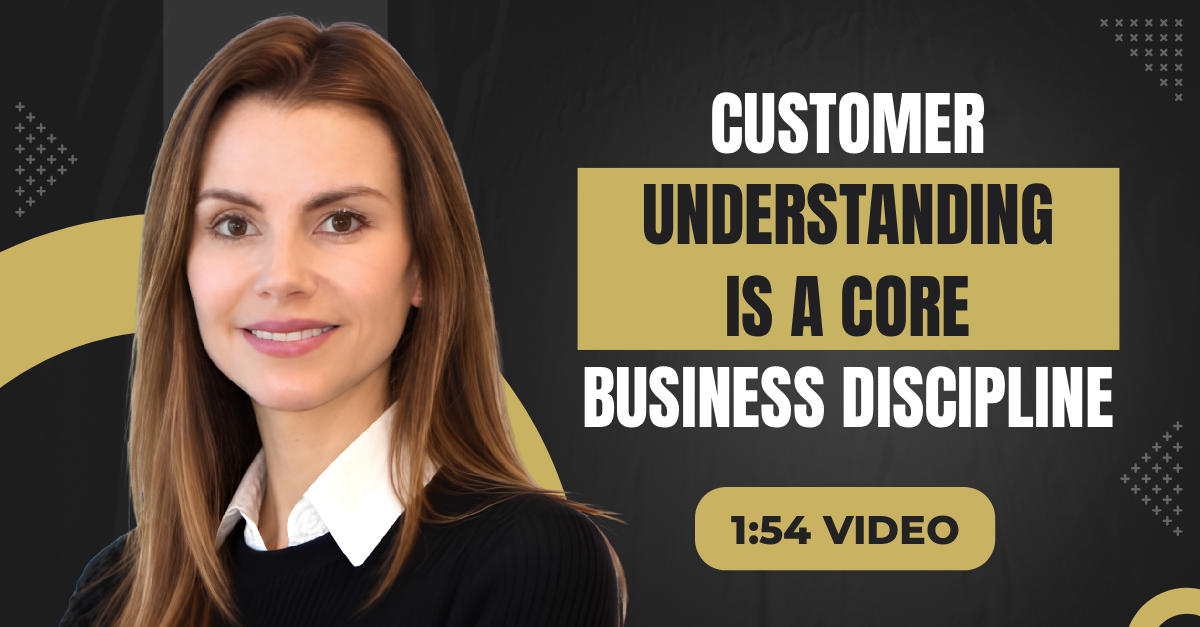
Jillian Als, Chief Marketing Officer at Dealfront, reveals why misalignment is the hidden challenge slowing growth inside every organization. She explains how internal definitions of success must match across departments. Jillian shares why direct, agenda-free customer conversations reshape strategy. She also warns that chasing AI without clarity results in wasted effort rather than impact.

Growth is often discussed as a revenue target, but few leadership teams define what it truly means. In this episode, Jillian Als, Chief Marketing Officer at Dealfront, explained that the hidden obstacles slowing long-term progress are not market forces, competitors, or budget constraints. They are internal. She shared how alignment across departments becomes the foundation for predictable results that scale. 

Jillian emphasized genuine customer conversations and consistent definitions of growth as key drivers of strategy. Leaders who approach growth as a shared, organization-wide commitment create structure and clarity for execution.

“You need to have the most honest conversation about what growth means to you individually. Everyone needs to get around the table and align on where the organization is going, when agreement is reached, and how each strategic goal contributes to achieving that growth.” – Jillian Als

Key Takeaways:

  • Alignment begins with a clear definition of growth.
  • Customer conversations provide practical direction.
  • Shared metrics prevent siloed decision-making.

Listen to the full podcast or watch it on YouTube directly below.

Article: "The Hidden Challenge Every C-Suite Executive Faces (And How to Fix It)"

This article is based on an interview with Jillian Als, Chief Marketing Officer at Dealfront

Define Growth as a Shared Strategy

Growth goals mean very little without agreement among leadership teams. Jillian explained that leaders should “have the most honest conversation of what does growth mean to you individually.” She shared that growth can mean expanding products, increasing customer spend, or moving into new markets. Without clarity, “definitions of what good looks like varies, goals and strategies diverge, objectives rather than merge.” Growth should not be a number alone. It should be a roadmap. When leaders talk openly about their expectations, they remove assumptions. Jillian stressed that cross functional teams need to connect their daily activity to the organization’s strategic objectives.

Clear growth definitions influence how budgets are set, teams are structured, and impact is measured. When departments understand what growth requires and when decisions are made, they become aligned in purpose instead of working independently toward different outcomes.

Customer Conversations Create Strategic Clarity

Jillian highlighted why direct customer conversations guide strategic decisions better than dashboards. “As a C-Suite executive, you should be talking to the customer. You cannot get that far removed,” she explained. She regularly schedules agenda free discussions in her first weeks at a new organization. She asks customers how they describe the product, what value they receive, and what they would change.

These interviews reveal information that data cannot provide. “You get so many anecdotes you do not see in the data,” she said. Leaders who listen without a pitch uncover insights about user behavior, priorities, and real world application. Jillian noted that metrics show what happened, but they do not show what matters next. Customer conversations expose immediate opportunities and challenge assumptions that may have become normalized internally. When teams understand why customers stay, renew, or leave, they build stronger strategies.

Bring Alignment to the Leadership Level

Jillian believes alignment begins with executive responsibility. “It starts at the top,” she said, because strategic decisions impact every team. She emphasized that leadership teams must treat alignment as their first responsibility. “My first team is the leadership team,” she explained, because decisions at that level must be coordinated across the organization. Leaders should share metrics and incentives so departments do not work against one another.

She noted that growth often suffers when departments chase different priorities. “We cannot incentivize people with different metrics because it creates divergent behavior.” Jillian recommends common goals and consistent language so that teams move together. Leaders who develop shared expectations create stability and remove friction. Jillian said that alignment should feel like “being coaches for all the teams” to help them work faster and avoid organizational silos.

Conclusion

Alignment is not a one-time planning session. It is a daily practice built on clarity, conversation, and accountability. Jillian Als’ perspective shows that growth can be shaped and controlled internally when leaders focus on defining expectations, listening to customers, and creating shared objectives across departments. She frames growth as a responsibility rather than a target. 

Leaders who invest in customer conversations, consistent strategic language, and measurable shared goals build organizations capable of sustaining results. The most valuable insight is simple. Growth is controlled by teams within the organization, not by external pressures. When leaders embrace that truth, they build a culture where strategy becomes possible, and execution becomes predictable.

ELEVATING CONTENT MARKETING STANDARDS RAISES A CRUCIAL QUESTION:
Why shouldn’t the very act of creating thought leadership content also spark new conversations with in-pipeline deals, top prospects, and high-priority customers for revenue expansion? Or serve as the cornerstone for learning and applying voice-of-customer strategies? That’s the power of ABM Podcasting—engaging B2B buyers and customers in meaningful conversations that uncover essential go-to-market insights, support long sales cycles, reinforce your market perspective, build peer-level trust, and dismantle objections that kill deals.

Picture of Steven MacDonald

Steven MacDonald

Steven MacDonald is the founder of Content Strategies, CEO of a MarTech SaaS Company, fractional CMO consulting with leading B2B companies and former Director of Strategy and Client Service at top ten digital marketing agencies.

Follow Steve on LinkedIn.
Picture of Steven MacDonald

Steven MacDonald

Steven MacDonald is the founder of Content Strategies, CEO of a MarTech SaaS Company, fractional CMO consulting with leading B2B companies and former Director of Strategy and Client Service at top ten digital marketing agencies.

Follow Steve on LinkedIn.

Explore more articles

Part Nine: The Revenue Logic of Customer Obsession

Episode #328: Michael Scott, Global Chief Revenue Officer at LoopMe, explains the revenue logic behind customer obsession. He shares how deeper customer understanding helps companies ...
Read More

Stop Chasing AI Tools and Start Building Better Thinking

Episode #327: Trine Tirsgaard, Group Chief Marketing Officer at Twoday, explains how customer understanding, data, experimentation, and continuous learning can create greater strategic value with ...
Read More

(4:09 Q&A Video) “Customer Value Elevates Marketing Into Strategic Business Leadership”

In this 4:09 video, Trine Tirsgaard explains why customer curiosity and business understanding are essential for creating meaningful value in modern B2B marketing. She emphasizes ...
Read More

Part Eight: The Revenue Logic of Customer Obsession

Episode 326: Laura Davis, Chief Marketing Officer at Rimes Technologies, explains why customer obsession must translate into commercial outcomes. She explores customer intelligence, AI, data ...
Read More

(5:22 Q&A Video) “Customer Conversations Turn Marketing Into Strategic Intelligence”

In this 5:22 video, Laura Davis explains why staying close to customers gives companies a stronger understanding of changing priorities. She shares a high bar ...
Read More

How to Become a Successful AI-Native Company

Episode #325: Nick Malone, Chief Revenue Officer at XTM, explains what separates successful AI-native companies from organizations simply adopting new tools. He explores value-led AI, ...
Read More