Melissa Moody, CEO at Matcha and with 14 years of experience at Google and as a founder, shares insights on the evolving role of the CMO. She emphasizes the importance of having a seat at the table and being involved in strategic decision-making. Melissa also highlights the need for marketers to listen to their customers and encourages CMOs to focus on both running the business and changing the business.
As the marketing landscape continues to evolve, so does the Chief Marketing Officer (CMO) role. Today, CMOs are expected to have a broader perspective and play a more strategic role in shaping the direction of the business. Melissa Moody, Chief Executive Officer (CEO) at Matcha, offers valuable insights into the changing role of the CMO and how they can navigate the challenges of broader responsibilities.
“It’s never so much about something on paper or a specific salary or equity. It’s about the feeling you get when you’re sitting with your coworkers at that highest level and you bring something that has come out of the marketing side of the business, but should be an influence to the overall business.” – Melissa Moody
Key Takeaways:
CMOs should strive to have a seat at the table and be involved in shaping the overall business strategy.
The role of a CMO is expanding to include not just marketing, but also other aspects of running a business.
Execution is crucial in marketing, and CMOs should be involved in both strategy and implementation.
Marketers should focus on creating content that is valuable, respectful of the audience’s time, and tailored to their needs.
Listening to customers is critical for success in marketing and helps in understanding their preferences and needs.
Article: “How to be a CMO in a Rapidly Growing Startup”
From a podcast interview with Melissa Moody, CEO of Matcha
The Spectrum of Marketing
Melissa Moody’s experience in both large corporations and small startups has given her a unique perspective on the spectrum of marketing and her time at Google exposed her to the workings of a massive marketing machine. In contrast, her previous role as a founder and General Manager at a startup required her to navigate the challenges and independence of a smaller organization. She emphasizes that the company’s size dramatically influences the nature of the marketing role. At a large company, marketers have access to abundant resources and operate within a well-defined structure. In contrast, marketers at small startups must be scrappy and creative, finding innovative ways to achieve their goals with limited resources.
The Importance of Having a Seat at the Table
One of the critical challenges for CMOs is gaining a seat at the table where important business decisions are made. Melissa believes that having a seat at the table is not just about the title but about being heard and able to shape the business’s direction. She advises CMOs to bring recommendations and observations that go beyond marketing strategy. By demonstrating a deep understanding of the market, the competitive landscape, and the shifting customer trends, CMOs can position themselves as valuable contributors to the overall business strategy. She emphasizes that it’s not just about filling a piece of the puzzle but helping shape it.
Balancing Strategy and Execution
The role of the CMO extends beyond strategic thinking; it also requires effective execution. Melissa acknowledges that CMOs are often forced to balance strategy and execution, especially in today’s fast-paced business environment. While strategy is crucial for long-term success, execution is essential for driving immediate results. She also highlights the need for CMOs to stay informed about the latest trends in marketing and encourages CMOs to listen to their customers, test hypotheses, and learn from the results. By focusing on execution that aligns with the needs and preferences of the target audience, CMOs can drive meaningful outcomes for their organizations.
The Customer-Centric Approach
Melissa emphasizes the importance of a customer-centric approach in marketing. She believes that by truly understanding the customer, marketers can create content and experiences that resonate with them. She suggests that marketers move away from traditional marketing playbooks and focus on creating content that is valuable, engaging, and respectful of the customer’s time. Marketers can build stronger connections and drive better results by respecting customers’ time and delivering the content they want to consume.
The Need for Continuous Learning
Continuous learning is essential for success in today’s rapidly changing marketing landscape. Melissa urges marketers to stay curious and constantly seek opportunities to learn from their customers and the market. She encourages marketers to listen to customers, research, and test new ideas. By embracing a mindset of continuous learning, marketers can stay ahead of the curve and adapt their strategies to meet the evolving needs of their target audience.
Conclusion
The role of the CMO is evolving, and CMOs must adapt to the changing landscape to stay relevant and practical. Melissa Moody’s insights shed light on the challenges and opportunities that CMOs face in today’s business environment. By focusing on the customer, balancing strategy and execution, and embracing continuous learning, CMOs can position themselves as valuable contributors to the overall business strategy. As the marketing landscape continues to evolve, CMOs must stay agile, creative, and customer-centric to drive meaningful results and shape the future of their organizations.
ELEVATING CONTENT MARKETING STANDARDS RAISES A CRUCIAL QUESTION: Why shouldn’t the very act of creating thought leadership content also spark new conversations with in-pipeline deals, top prospects, and high-priority customers for revenue expansion? Or serve as the cornerstone for learning and applying voice-of-customer strategies? That’s the power of ABM Podcasting—engaging B2B buyers and customers in meaningful conversations that uncover essential go-to-market insights, support long sales cycles, reinforce your market perspective, build peer-level trust, and dismantle objections that kill deals.
Steven MacDonald is the founder of Content Strategies, CEO of a MarTech SaaS Company, fractional CMO consulting with leading B2B companies and former Director of Strategy and Client Service at top ten digital marketing agencies.
Steven MacDonald is the founder of Content Strategies, CEO of a MarTech SaaS Company, fractional CMO consulting with leading B2B companies and former Director of Strategy and Client Service at top ten digital marketing agencies.
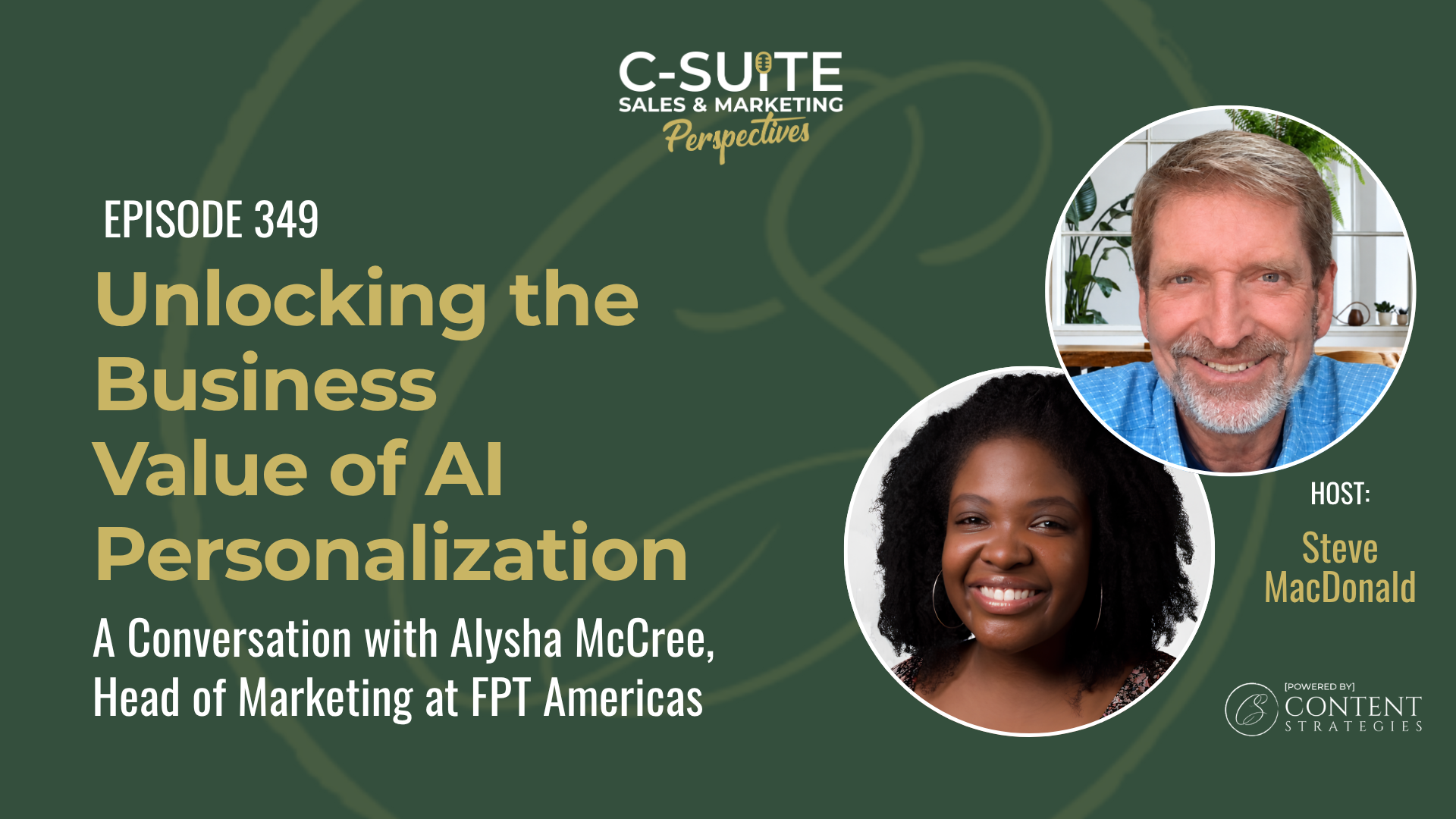
Episode #349: Alysha McCree, Head of Marketing at FPT Americas, explains why simply claiming AI leadership no longer sets a company apart. She shares how ...
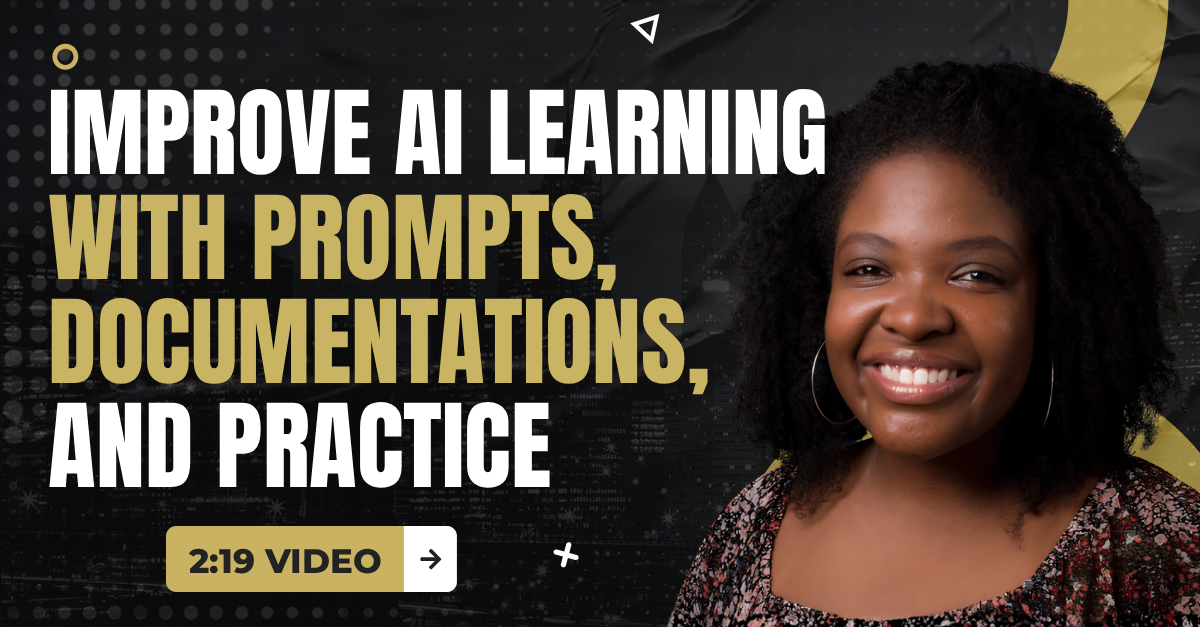
In this 2:19 video, Alysha McCree shares how her team learns to use AI through ongoing experimentation and peer teaching. They build documentation and prompt ...
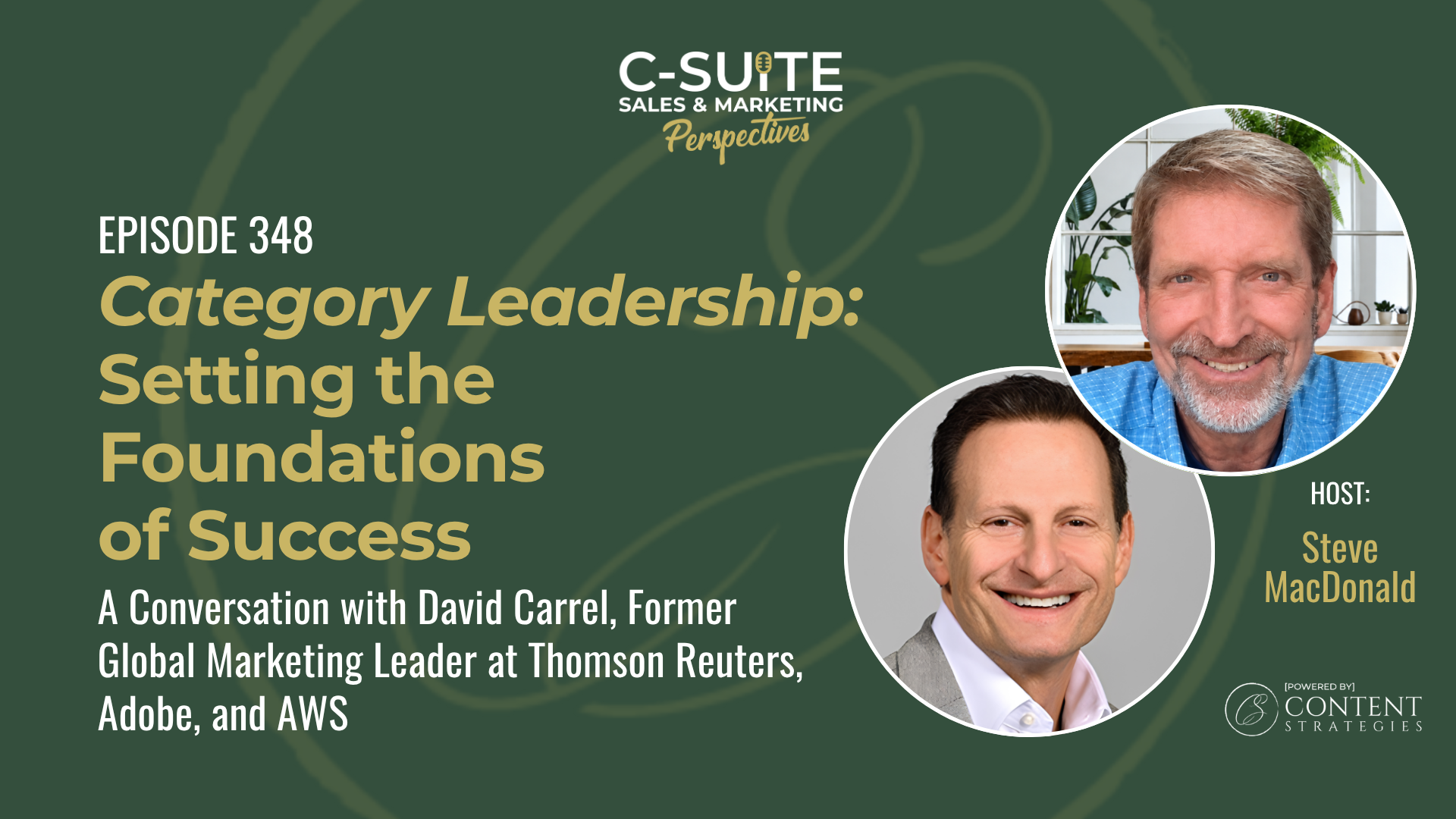
Episode #348: David Carrel, Global Chief Marketing Officer at Thomson Reuters, explains how category leadership goes beyond thought leadership to shape how a market thinks. ...
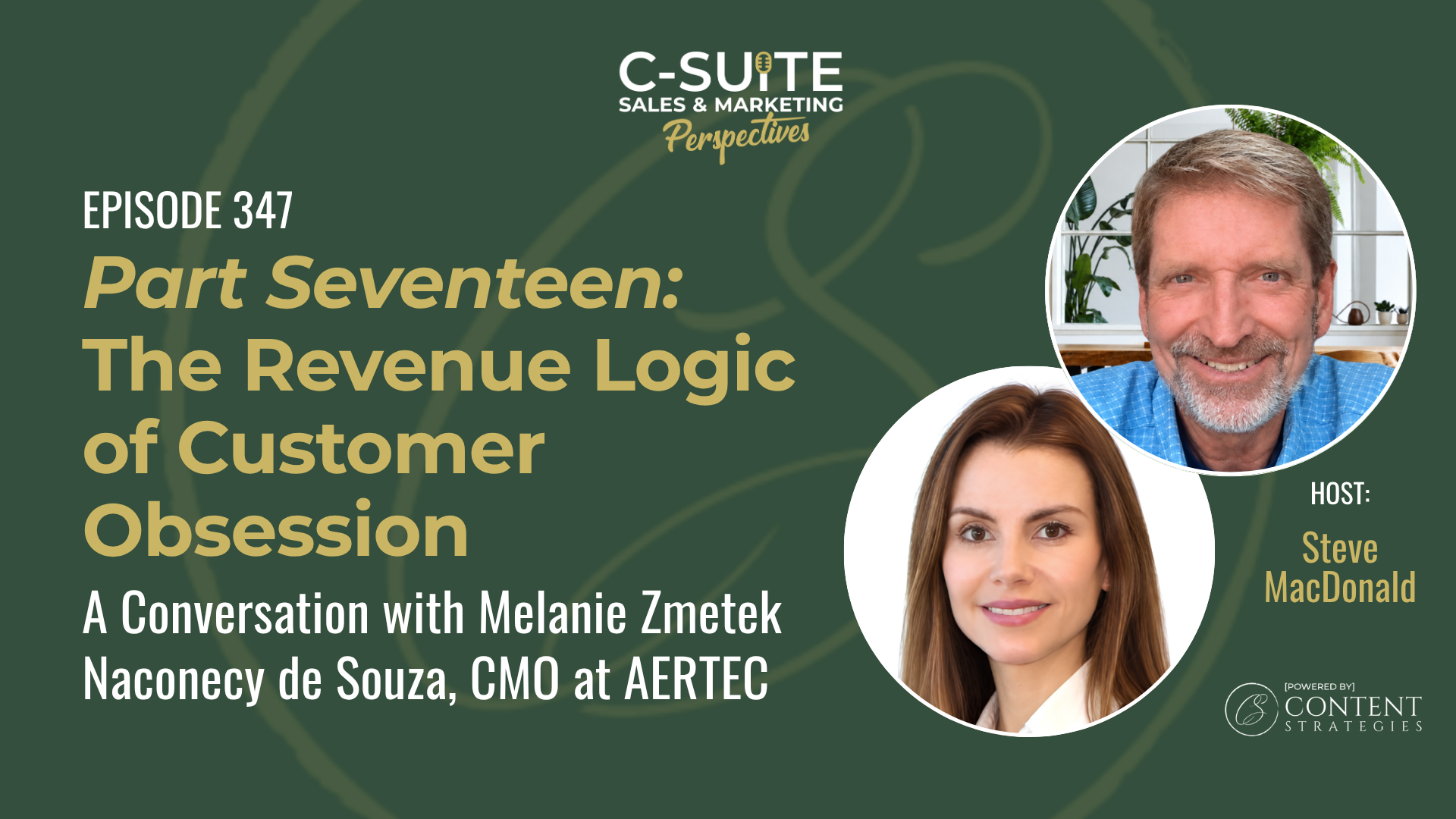
In this 1:54 video, Melanie Zmetek Naconecy de Souza explains why B2B customer understanding must begin with people. She shares how buyers bring priorities, challenges, ...
Episode #346: Ashley Deibert, a three-time Chief Marketing Officer, explains why customers are one of the most valuable growth assets B2B companies often underuse. She ...