

Episode #230:
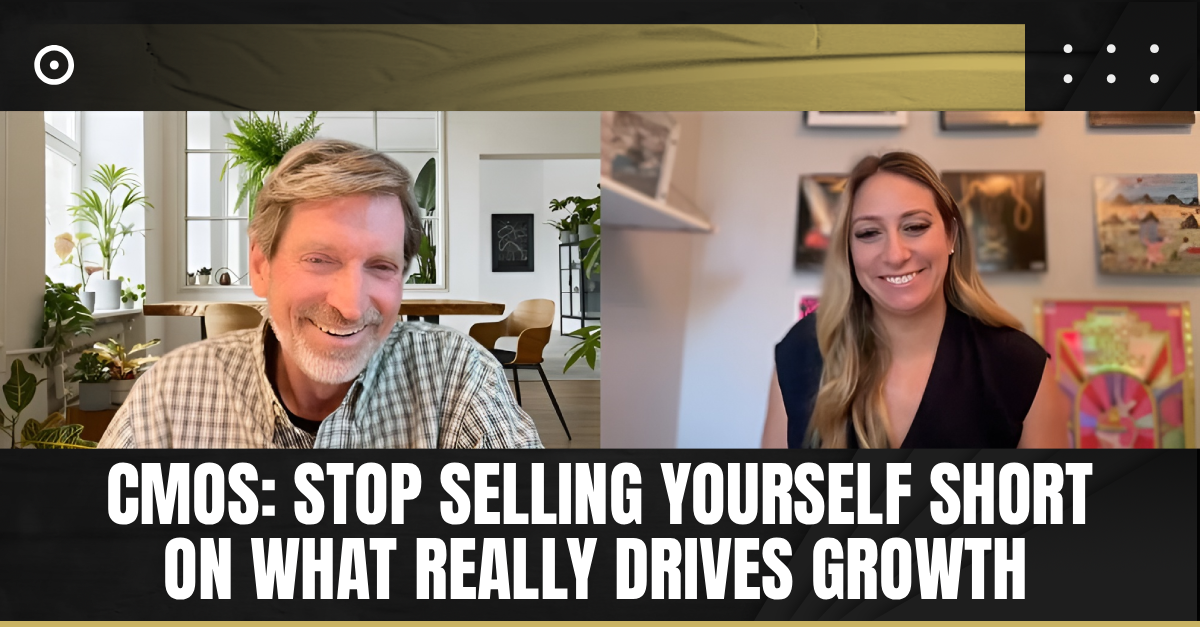
Emily Ferdinando, Chief Marketing Officer at Bugcrowd, explains why pipeline quality and progression outclass vanity metrics. She details how non-linear journeys demand broader influence tracking. She demonstrates that regional activities account for a quarter of closed opportunities and closes with ABM activation, shared KPIs, and content mapped to stages.
“We’re no longer doing things just because that’s what marketers are supposed to do. We’re doing things that are really going to drive business impact.” — Emily Ferdinando
In this episode, Emily breaks down what CMOs must change to align marketing with measurable business outcomes. She shares how redefining attribution, refining ABM activation, and adopting shared sales goals create stronger cross-team accountability and faster revenue growth.
Follow Emily Ferdinando on LinkedIn
Follow Steve MacDonald on LinkedIn
[Transcript]
[00:00:05] Steve MacDonald: Welcome everyone to the C-Suite Sales and Marketing Perspective podcast. I’m Steve MacDonald, your host, and today I guarantee we have an incredible conversation to have here with Emily Ferdinando. Now, Emily, you’re a Chief Marketing Officer, but you’re not the typical Chief Marketing Officer. And I’m gonna let you explain who you work for and what the company does because I think it’s important.
[00:00:27] Steve MacDonald: But you come up not from the marketing side of the organization, but you come up more from the revenue side of the organization, which is phenomenal because as marketers, we all know we have to be much more pipeline-focused, much more revenue-focused, and we can’t just be as good as our last MQL.
[00:00:44] Steve MacDonald: So we have to be very focused across the entire buyer’s journey these days, and how do we track that, and how do we create that kind of success? And if we do that, we stop selling ourselves short. We stop being perceived as a cost center, just as good as that last MQL, right? We stop feeling like we gotta scratch and claw to get a seat at the table, right?
[00:01:08] Steve MacDonald: We have a rightful seat at that table, and we’re seen as a marketer that contributes significantly to revenue in the organization. So that’s why I’m really excited about having this conversation today. But I would love to have you just expand on your background just a little bit before we get started.
[00:01:26] Emily Ferdinando: Sure. So, I am the Chief Marketing Officer for a company called BugCrowd. We are the leading crowdsourced security provider. So we have a platform that’s AI-powered that allows ethical hackers to be paired really exceptionally with people who are looking to pressure test their security posture. It’s really fun because we have an audience of commercial folks and an audience of hackers that we get to work with.
[00:01:47] Emily Ferdinando: It’s a really fun brand and a really cool company to work at. I landed there after about 10 years in the software security space. So I’ve been in the software security space leading marketing in various go-to-market roles for a while. And yeah, as you said, I came from the go-to-market side of the house on the revenue side.
[00:02:05] Emily Ferdinando: So I have a propensity towards: are we doing cool stuff, and is that cool stuff actually leading to value and actually doing things that are impactful on the bottom line, and working really closely with the sales and SDR teams to get that done.
[00:02:18] Steve MacDonald: I would love to start out just with your point of view. You talked about, Steve, how we need to think about rethinking demand performance and what we’re actually tracking and understanding the, what you called hidden influence factors to growth. So I’ll turn it over to you to explain what you’re thinking about on that front.
[00:02:39] Emily Ferdinando: Sure. Yeah. So my thinking there has evolved a little bit over time, right? As you get your hands dirty, you kind of understand the different impacts that things are having. First and foremost, it was coming in with a very strong sentiment that those vanity metrics that a lot of traditional marketers used to track on a regular basis genuinely did not have a lot of meaning for the broader organization.
[00:03:00] Emily Ferdinando: You know, there are certainly leading indicators, but coming in and justifying the spend and the programs that you’re running by talking about impressions and click-through rates—it’s cut it. My first thing that I did with the group is really just work with everybody to understand how are we measuring whether the things that we’re doing are actually driving meaningful impact for the business.
[00:03:21] Emily Ferdinando: So we went from MQLs and your traditional metrics to: what is our pipeline that’s progressing to a high propensity to close looking like, what is the quality of the pipeline we’re driving, how does it behave, is it predictable, what are we driving in bookings? That really got us to some very meaningful decisions and some efficiencies about where we spend the dollars that we’re spending. We’re no longer doing things that you’re supposed to do because that’s what marketers do. You’re doing things that were really going to drive business impact.
[00:03:56] Emily Ferdinando: But in that process, we learned that we were cutting ourselves short a little bit in that you can get over-rotated around the way in which you’re measuring some things. So, for example, if you’re only looking at first- and last-touch attribution, which a lot of companies do to reflect the value of marketing spend, you’re not understanding the really complex dynamic of an actual customer experience.
[00:04:11] Emily Ferdinando: It is not a funnel, it’s not linear, and there’s a lot of things that happen between them coming into your database and them signing up for an opportunity that have huge meaning and value and maybe are not showing up in your reporting infrastructure. We learned that, as an example, we’re using a tool that gives us visibility into the entire buyer’s journey, and we realized about 25% of our opportunities that closed engaged with at least two to three regional activities throughout the cycle of becoming a lead and becoming an opportunity.
[00:04:40] Emily Ferdinando: So there’s a huge, very critical component of the experience that we had de-invested or deprioritized because it wasn’t showing up in our initial reporting structure. So heading to, you’ve gotta start—yes, reporting is important and your data is important—but so is the actual real-life, practical experience people are having, and you have to be able to justify and understand the impact that those types of activities have and hold that line and be able to have that conversation in an educated way.
[00:05:14] Steve MacDonald: I remember now our first conversation, and you were like, we had taken, like, regional activities and events, we had defunded them in the budget in a massive way, and then we found out, no, these are really important touchpoints. And I can’t remember the exact studies, but you know how many touches it takes to actually—and especially in an ABM motion, right? I mean, that’s happening over a year at a time or more. Even sometimes the amount of touchpoints is absolutely intense.
[00:05:44] Steve MacDonald: And so if we’re only looking at the very first and the very last—reading the first page of the book and the last page of the book—you’re gonna miss everything in the middle, or the whole middle of the movie. So I love that.
[00:05:56] Emily Ferdinando: Because you have to figure out, yeah, you have to justify your spend. And you also can’t be spending 75% of your budget on things that don’t immediately drive pipeline and return. So you have to thread that needle. It’s complicated, but we’re getting there.
[00:06:11] Steve MacDonald: So I know that people are thinking right now, I love the idea. Everything you’re saying makes perfect sense. Could you give us a couple more ideas of things that you track now that you weren’t tracking before, or we don’t typically track, that you’ve seen are really important, just so that we could get a little bit more kind of depth behind this.
[00:06:32] Emily Ferdinando: Yeah. So the first and foremost is what we were just talking about. Now we’re looking at not just what activities are returning, what in-sourced pipeline and opportunities and bookings, but we’re also looking at influenced, meaning spread across all the different things that touched an opportunity.
[00:06:49] Emily Ferdinando: How much did it influence this versus other activities? So we are looking at influenced for sure, but we’re also looking at what role did this channel or tactic play, when, and for whom in the buyer’s journey. We know it gets credit for a certain percentage of the activity, but we also know that it’s around here three to six months out of the opportunity where people are mostly engaging with this tactic type, and we can be really timely about how and when we drive value of those activity types and who sees value from them. So that’s been an important aspect for us.
[00:07:20] Steve MacDonald: You don’t have to go much farther than, like, the LinkedIn Edelman studies on thought leadership and things like that, and as CMOs, we have this constant balancing act between brand development and short pipeline development, and you never want to go into a board meeting saying, let me tell you about our latest thought leadership initiative.
[00:07:39] Steve MacDonald: Nobody cares, but you look at those studies and they’re like, no, absolutely. Actually, lack of thought leadership these days is a detriment in an ABM process. It is just one example of its importance. Have you been able to identify, or do you have a greater knowledge or understanding, or just even a thought of thought leadership in that kind of brand-building component and its importance?
[00:08:01] Emily Ferdinando: The reason nobody wants to hear you talk about your thought leadership in a board meeting is because it’s often used in arrears to describe the value of something that didn’t actually do what you thought it was going to do. If you don’t get the pipeline from a pipeline-driving activity, you go, well, it—but it drove great brand awareness and thought leadership, and that’s why it gets a bad rap.
[00:08:19] Emily Ferdinando: But if you set a precedent of being able to track the things that are meaningfully moving the needle and can also confidently describe what role thought leadership does play, then they do care. It matters in share of voice. It matters in community activation and scale. If you can talk about how you ultimately get uplift and even pipeline impact—measurable pipeline impact—from community activations, then that thought leadership becomes important. At BugCrowd, I’m lucky to have just an incredible, incredible brand and community and social and content team.
[00:08:54] Emily Ferdinando: We have just the most creative, and I’ve described the team before like this, but they’re just cool, and they get it, and the community likes them, and they understand how to tap into trends and put out meaningful content that resonates and people want to consume. And that has made a difference—locking into that and not using it as a completely separate silo, but seeing the value in that, and then tapping into it from a pipeline and demand perspective when you start to get the momentum.
[00:09:21] Emily Ferdinando: It’s been really beneficial for our team. We’ve got some really cool social campaigns running right now. We’ve got a great community activation series. It just really helps with scale, and you can see the measurable impact through, again, share of voice, but also the way pipeline behaves when those activities are engaged.
[00:09:39] Steve MacDonald: This is gonna be a new question, and I don’t know if you have insight into this or not, but there was a three-time B2B CMO that was on the podcast, and she said, “Steve, these thought leadership brand campaigns,” she said, “not only is today’s brand tomorrow’s demand, but it takes away cycles from the sales process.” Because the sales team isn’t having to build their brand on their own. They’re not having to establish trust in the brand the way that they would have if we weren’t preceding that, and their own personal brands as trusted advisors, not just sellers, are increased as well. So it puts them significantly ahead of the game. And I don’t know if you have any insights into that, or agreement or disagreement, or just a different point of view on it.
[00:10:22] Emily Ferdinando: I do. Yeah. And I think it depends on that dynamic of your organization, your market, your team, where people drive the most value. For us, we saw driving brand and awareness as an opportunity to improve our sales performance. And what I mean by that is a lot of demand organizations, they see their job as to hit the top-of-funnel number, and this is why we shifted down the funnel. What that really drives is the more people I can get—meaning the sooner I can capture people and the more people I can get top-of-funnel—the better our sales. That’s the assumption. The better our sales process is gonna be because they have more to work, and they’re just gonna crush the discovery and go from there. That could be true, but what we learned is that our team is really great at sharpshooting. When we have a high-value opportunity, they’re gonna close it.
[00:11:08] Emily Ferdinando: But if they have to spin all of their wheels on discovery and trap setting and warming things up and nurturing, it just takes a lot of cycles away from them focusing on truly driving value for customers and having meaningful engagements. So we saw things perform and progress better when marketing took on some of that onus of driving that value for them.
[00:11:28] Emily Ferdinando: Essentially, what we said was, let’s have us own driving some of that discovery through market and awareness, through that type of nurture segment before it gets to you in the first place, so that when we pass something over to the sales team, the concept being that it’s further down the process, they’ve done more of their research, they’re more aware of us, and the process can move faster. They have fewer sticking points to get through. They don’t have to slog through so much discovery and awareness on the beginning stages of the opportunity, and things are progressing forward faster.
[00:12:01] Emily Ferdinando: Part of that is our ABM activation, which makes that easier because sales and marketing become more of that handshake. You can be agile about when things make it to whom. And that really targeted, value-based messaging upfront warms it up so that when it makes it to them, things move faster and there’s less for them to climb uphill at the beginning of the deal.
[00:12:22] Steve MacDonald: You keep saying really interesting things that I want to dig deeper on, and I got a whole agenda of stuff I want to cover, but, so you talked about ABM activation. This entire podcast is all for B2B ABM go-to-market motion companies. I would love to hear your point of view on what ABM activation is, and traditionally in marketing, if you just kind of look at it in a very stereotypical way, it’s like I queue up a lead, right? Somebody filled out a form, I got an email address. Now we turn it over to the SDRs or BDR team, and they do a bit of that early nurturing and discovery process and queue it up for the sales team.
[00:13:01] Steve MacDonald: I’m trying to understand what’s different about what you’re doing from a traditional SDR, BDR kind of role? And do you work with SDRs and BDRs, or can you just decouple that for us on this ABM activation front?
[00:13:15] Emily Ferdinando: Sure. There’s a lot in there, so I’ll unpack it slowly. What do I mean by ABM activation? Which I think is a good question because it’s one of those terms where you can ask anybody, and you’ll get a different answer on what ABM is. I think most organizations say they’re doing ABM if they have an ICP and they’re doing targeted messaging. My argument would be that’s just targeted marketing. Technically, is it ABM? Sure.
[00:13:36] Emily Ferdinando: But for me, real ABM is when it goes beyond the marketing tactics, beyond the high-velocity, high-volume digital activations, and you’re really, like I said before, sharpshooting at these very specific segments where you know you resonate well and you know you have a strong message, and you know you can provide value. And you hone all your resources into a smaller categorization and really go after small lists. So your one-to-few, and then even better when you can get mature enough to do your one-to-one. These are the deals we know we need to land, and this is the value we know we can bring. But it doesn’t work if it’s just marketing. So I’ve always hated that it’s called ABM because, um, yeah.
[00:14:13] Steve MacDonald: Account-based marketing, right? Yeah.
[00:14:15] Emily Ferdinando: Full go-to-market motion. So at Bugcrowd, when we talk about ABM, we’re not talking about our ICP. You have to have that. We know it. That’s great. That’s running. When we talk about ABM, we’re talking about a true go-to-market strategy, inclusive of how we build the territories, how we have our Salesforce system architected, like ops, channel, marketing, sales, co-ownership, sales playbooks.
[00:14:38] Emily Ferdinando: To answer your second part of that, how does that work with SDR? So we do have SDRs on our team. They actually roll up to the marketing organization. We’re lucky enough to have a really strong SDR leadership team who’s very committed to ABM, and some sales leaders who are also really committed to ABM, so that part works. That relationship works.
[00:14:56] Emily Ferdinando: But how it differs is they’re not getting a whole slew of really early-stage cold leads anymore. What they’re getting is what we call, so we use 6sense as our intent tool. We have high-scored accounts, and yes, you still have queues for all of your MQLs and contacts and people who do high-value activities in those accounts, but we’re serving accounts who are in a certain stage of intent with us, who have a certain amount of people in their buying group that are engaging with us at later stages. It’s way warmer by the time it gets to them, and our SDR and sales teams are equipped with how do I know how to drive the most value to this specific account using the info, the quick AI-based research that we’re able to provide.
[00:15:41] Emily Ferdinando: How do I know how to drive value for this specific team, and how does it differ by buying group member? They’re much more trained on really targeted, research-based outreach, value-based outreach for specific accounts, than on, let me call a million individual people, sometimes only one per account, and do hundreds and hundreds of dials every morning saying the same pitch no matter who I’m talking to.
[00:16:04] Emily Ferdinando: I know that’s never anybody’s intention. We always want a little bit more personalization, but in practice, when you’re doing high velocity, there’s only so much personalization other than title and name that you can do. So they’re really honing in on: do I understand this company? Do I understand their pain? Based off of what I know from all of the people engaging and all of the insights that I have. So it’s much more about the account and the pain they’re trying to solve, and how we solve that problem, than it is awareness of who we are and trying to catch them at the right time and calling as many people as we can.
[00:16:38] Emily Ferdinando: The SDR team honestly is the bridge between all of us that really makes it work, but they take all of the goodness that comes in from the marketing organization, all the research and insights, and all of the partnership and networking, etc., from the sales team. It’s really a handshake to make sure we’re engaging with people in a way that’s meaningful.
[00:16:56] Steve MacDonald: Now I’m gonna ask another question, which is, you said the SDR team rolls up into marketing and reports into you. What was the thinking, the decision process? There’s a lot more of that happening. Traditionally, SDRs and BDRs have all reported into sales. There’s a lot more shift. What were the internal conversations that led to the SDR team being under your organization?
[00:17:16] Emily Ferdinando: So I’ll start with my methodology on it, and that is I don’t really care what team that function reports to. I don’t think that’s super important, barring a very specific instance, which we did have, which is the marketing organization needs to get more mature. The marketing organization needs to pull itself closer to the revenue team. They need to understand that feedback loop. They need to know what is and isn’t working. Honestly, we need to have a shared accountability to sales and pipeline and opportunities. When you need to build that muscle for the marketing organization, I think it’s critical to both teams, but specifically to the marketing team, to have the SDRs sitting in seat with that group because you need that honest insight.
[00:17:55] Emily Ferdinando: If you have a shared accountability between the SDRs and marketing, the SDRs will tell you if stuff’s not working. Whereas it can be easy for marketing team members to shake each other’s hands and go, we did what we said we were gonna do. They must be thrilled. It’s great. But the SDRs will hold you honest. When you’re trying to mature that part of the function, I think you need to have it in-house with the marketing team to get the marketing team up to speed. And same thing when you’re building up the SDR function, sometimes having it be really close to the accountability of conversion on pipeline from leads and things like that can be crucial.
[00:18:27] Emily Ferdinando: But when both are more mature, I care a lot more about how it operates and how strategic it is and how effective it is than I care which team it works in. If both teams are mature and anybody’s caring about that, it means there’s a fundamental gap that needs to be resolved between the marketing and sales organization that has nothing to do with the SDRs.
[00:18:49] Emily Ferdinando: If those two relationships are working well and they’re serving each other, I don’t think it matters quite as much.
[00:18:55] Steve MacDonald: You keep bringing up some really important things. So you’ve talked at the beginning about the importance of community activation. You’ve talked about your content team, how important they are, and how cool they are, and they just create content that really engages and activates. Forrester said, and kind of put a line in the sand, that in ABM content is the foundation. It’s not just upfront, it’s content through the entire journey.
[00:19:24] Steve MacDonald: The stat that always kills me, as I founded two different companies, is that I think it’s something between 60 and 80% of content that marketing creates, sales never even uses. In fact, they say it’s worthless, right? And I’m not saying that’s happening in Bugcrowd at all. That’s an industry-wide stat.
[00:19:41] Steve MacDonald: It’s a problem for all of us to solve as a community. In the tracking and the revenue ops lens that you look through things at, how important is your content and your content team to not only the activation side, but the handoffs and facilitating what the SDRs need to do and facilitating what the sales team needs to do to get to the closed-win ratio?
[00:20:06] Emily Ferdinando: Yeah. So I think the biggest gap when you hear those things is it’s actually the language. It’s what we mean when we say it. I’ve been an SDR, and I remember saying, you’re doing all this content, I’m not even using it. I don’t see any value from it. Because what I meant was when I send that as an attachment in my outreach, no one responds to me in books and email. What I’m not thinking about, and where there is a ton of value, is that content is reaching my audience in the background while I’m prospecting, and it’s creating a sense of awareness that is creating a drumbeat and making them think about us so that they’re more likely to respond to my email that didn’t have that content attached.
[00:20:41] Emily Ferdinando: So there is a role that it’s playing that is driving a ton of value that sometimes a sales team just isn’t thinking of because it’s not what they’re doing in practice. It plays a role. Like we said, it may not be sourcing a meeting, but it could be influencing the meeting based off of what people’s exposure is to that asset. That’s often the biggest gap when you say that, what do you mean? Because it can be really easy to hear, “The content’s crap and it doesn’t drive any value,” and to go, well, shoot, then I guess let’s stop doing that and do something else, when what they really are saying is, “If I send this out, it doesn’t immediately source a meeting.”
[00:21:15] Emily Ferdinando: That’s what I mean when I say those conversations between teams are so crucial, and understanding each other and what you mean by things is so important, because it can accidentally drive incorrect assumptions in decision-making that breaks down value as opposed to driving it. But I’ll also say, from an ABM perspective, setting the foundation of really good content, regardless of whether or not people in sales are using it one-to-one to actually drive new meetings, it’s still very important because it becomes the messaging the team understands when they’re doing prospecting.
[00:21:48] Emily Ferdinando: It becomes what people in the market are seeing when they look you up after they got an email from an AE or SDR. Our team has done a pretty impressive job before we even fully launched ABM go-to-market in really mapping content by persona, by ICP, by intent stage. We have content for a CISO in banking and financial services that is in awareness, they haven’t heard of us before, and that content differs from what they want to see when they’re in the consideration stage. And that content differs from what they get when they’re an open opportunity with us or they’re an existing customer. We’ve got about four or five different stages. We’ve done a lot of research.
[00:22:32] Emily Ferdinando: Frankly, the team’s done a great job in understanding what type of content, what format, what watering holes do they like to receive it in, how do they like to receive their content, and really curating not just the content itself, but the experience through which people consume it from stage to stage, with a specific purpose of pushing them to engage into the next level of intent with us.
[00:22:53] Emily Ferdinando: Having that groundwork out to market really helps engage. Before people even get to us, they have an understanding and they’re getting things in the right way, but it also sets the groundwork for how our internal teams then communicate and engage, and it becomes the muscle memory that people have. It becomes the framework for how we interact with our audiences.
[00:23:13] Steve MacDonald: Oh, I love it. I feel like I’m going through a class right now, by the way. In a very good way. In a very good way. If I could extend that analogy out, where it may not be the piece of content that gets attached to the email that requests the next meeting and works that way, but it is doing the job to create the right impression and awareness and consideration and evaluation along the way.
[00:23:39] Steve MacDonald: Are you working with sales side by side in marketing through those buyer journeys in addition to their outreaches? Because that tends to be true at the beginning stages, but then we tend to have, in the marketing world, a baton pass, and now it’s up to you. I don’t want to get in the way of your sales process and what you’re working and how you’re working with them, but the need to surround that audience, in all the members of the buying committee that we’re trying to influence, it doesn’t stop because they went from awareness to consideration or consideration to evaluation. How do you think about that?
[00:24:21] Emily Ferdinando: Yeah, so that is something we’ve spent a lot of this past year leaning into. It was very black and white. Marketing is only focused on net-new customer opportunities, and as soon as the opportunity or even that first meeting happens, we can do the baton pass, and we move on. That’s now a contact, that’s now an opportunity. We don’t touch it, we don’t see it. Where that started to break down and what I was most excited about when we launched ABM is that we changed the way in which we set KPIs for each go-to-market team.
[00:24:51] Emily Ferdinando: Instead of marketing having a sourced pipeline and an opportunity goal, and then sales having the full bookings objective, we broke that down and we said, okay, nobody is winning until we all hit the pipeline and bookings objectives that we need in these segments. We have a shared number now, and as soon as we had that shared number, lo and behold, the marketing team started to realize, wait, what’s going on with these opportunities? Why am I not seeing all of these become bookings?
[00:25:20] Emily Ferdinando: They go into the opportunity and they realize, wow, there’s a trend here where some of these specific personas are getting stuck in early-stage opportunities. That’s where things like maybe we’re sending them over too soon start to happen, and it changes the way in which we do lead scoring and the way in which we create content. In some other areas it’s, boy, we might need to increase our differentiation messaging here, or maybe there’s a lack of urgency here for some reason. Suddenly, because the way we’re measured is now on bookings and we have that shared objective, the marketing organization is kind of crossing that boundary.
[00:25:53] Emily Ferdinando: Things we’ve done, for example, are setting up an open opportunity nurture sequence to specifically drive urgency in early-stage opportunities. Other things are just creating more awareness and thought leadership, so we have an annual report we create, Inside the Mind of a CISO, sending those out to people who are in early stages.
[00:26:12] Emily Ferdinando: We had people exploring a certain product, and we did a direct mailer to just give thanks for exploring this with us. We’re looking forward to having a conversation and just having those additional touchpoints, keeping us in their mind and looking like a good partner. Thought leadership, yeah, it may not be the thing that makes them call us and say, you know what, we’re gonna do this deal. But it does give them a sense of confidence that we’re a better partner, and that sticks with people and it makes those opportunities progress at a faster rate.
[00:26:40] Emily Ferdinando: We have a lot to go there and a lot more to explore, but the early stages of us exploring that—hey, let’s cross over the aisle and start helping you with your open ops. Let’s talk together about what needs to happen for these things to close, and here are all the ways we can help you that you might not have thought of yet. That’s really starting to unlock progression of early opportunities, and we’re excited to see where that goes, but we are exploring that, and it’s been productive so far.
[00:27:06] Steve MacDonald: I think that is the biggest opportunity that CMOs have—to get more involved in existing opportunities. As soon as it is inside Salesforce or HubSpot or whatever system you’re using, as it’s labeled in an opportunity, that’s usually where we stop. But the idea—the very foundation of nurturing a lead through the entire process—we know intuitively that makes sense. It is internal boundaries and alignments that keep us from doing that. I ask every C-suite executive that comes onto this podcast what they think their top two greatest challenges are to creating long-term sustainable growth. By far, the number one is internal alignment.
[00:27:56] Steve MacDonald: It’s based on a lot of different things—territorial issues, political issues, short-term versus long-term balance. But we end up working in silos. We don’t treat ABM that way. You don’t sideline members of the team just because you got to a certain part of the game, and that’s my takeaway, by the way, from our whole conversation here today.
[00:28:20] Emily Ferdinando: Yeah. I mean, I was honestly just sick of seeing any one team patting themselves on the back when the whole team wasn’t winning predictably and consistently. That’s a hard conversation. Like you said, people are protective of traditional ways of doing things, and honestly, I think the biggest unlock is the way in which we, as a leadership team, decide to measure team performance. If you have the objective shared—and frankly, it’s what you’re talking about as a sales leader—what’s our shared number? How are we doing this together? You’d be surprised what people figure out how to do on their own and the impact it can have.
[00:28:52] Steve MacDonald: It comes down to incentives, right? Traditionally, sales is very short-term focused because they’ve got a quota over their head, and we’re thinking about longer-term, lofty things like the brand. But if we have these shared KPIs, objectives, definitely, I’ve talked to organizations where marketing shares in compensation, and it fundamentally changes the game and the way people think about their roles, their responsibilities, and what they should or shouldn’t be doing in their jobs. I have to tell you, I think we’ve just started a series of podcasts here.
[00:29:27] Emily Ferdinando: We could get me talking about this stuff all day, obviously.
[00:29:30] Steve MacDonald: But absolutely. I wanted to give you the opportunity, because we’ve just talked about so much here, that if you could just boil it down to what’s the single most important thing that you want the CMOs, the CROs, the CEOs that are tuning into this conversation to take away—if there’s one thing to take away—what would it be?
[00:29:51] Emily Ferdinando: There’s so much to measure, and it’s so important that you do that, especially in this day and age when you’re having to justify everything all the time, and it’s important. But as you go through that process, you cannot forget the fundamentals of, are you doing what you wanted to do for the people that you’re serving?
[00:30:08] Emily Ferdinando: And that comes to your sales organization, it comes to your internal, your specific team in marketing, and your customers. At the end of the day, do you really understand what they’re experiencing? Is it what you want them to? You get to a point where you’re justifying everything and you’ve got your numbers and we’re doing this and they’re doing that. It just doesn’t help. At the end of the day, you can report as much as you want to, and you need to be able to showcase that you have a grasp of your role and your world.
[00:30:32] Emily Ferdinando: You also just need to take a step back occasionally and ask yourself the tough questions and just be open to, regardless of all of that, are we doing what we wanted to do? Sometimes the answer is yes, but often it’s no. You’ve just got to be open to that perspective and thinking about doing things differently, and that’s what we’ve been trying to do.
[00:30:50] Steve MacDonald: Here’s what I’ve got to tell you. The mission of this podcast is to get different perspectives and insights from C-suite executives, because as C-suite executives, we have to think differently than we did when we were a VP of Sales or VP of Marketing or something. We were focused on our silo, but as C-suite executives, we have to be focused on the entire organization and its success, and we’re accountable to the board where we have a whole new level of strategy that we have to have. If we can bring those kinds of insights and perspectives and experiences together, it’s the rising tide that lifts all boats. And you were an amazing part of that rising tide today. I just wanted to say thank you.
[00:31:31] Emily Ferdinando: Thank you. This is great.