
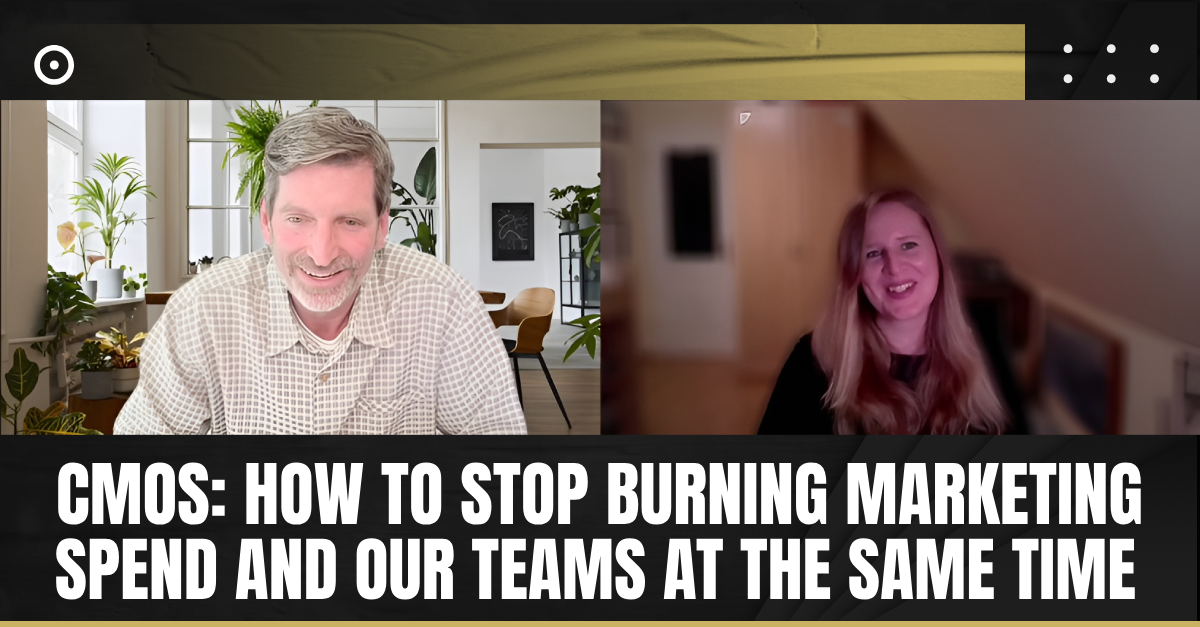


Ines Hubmann, Senior CX Marketing Consultant at Huble, discusses balancing short-term marketing wins with long-term brand strategies. She reveals how empathy, active listening, and a strong brand foundation save budgets and teams from burnout. Through personal anecdotes and real-world insights, she underscores the need for human-centric marketing in a tech-driven environment.
“The more time we put aside for brand and truly listening to the customer, the more effective our marketing will be, and the higher the results we can show.” – Ines Hubmann
Ines unpacks why empathy should be the backbone of marketing. She stresses active listening over quick, surface-level tactics, explaining how a genuine investment in brand strategy aligns teams, avoids burnouts, and boosts results. Through personal stories and proven examples, she illustrates how marketing that focuses on the human element consistently outperforms ego-driven approaches.
Follow Ines Hubmann on LinkedIn
Follow host Steve MacDonald on LinkedIn
[Transcript]
[00:00:00] Steve MacDonald: Welcome everyone to the C-Suite Sales and Marketing Perspectives podcast. I’m Steve MacDonald, your host, and today we’ve got a really interesting guest, Ines Hubmann. Now Ines, you are with Huble Digital, and you’re the Senior CX Marketing Consultant. I think you’re the number one—you’ll explain this better—Global HubSpot Partner, and you’re focused on working with marketing teams to make sure that they’re doing everything they can to focus on the customer, create that experience that we all want to create. You also are—I just found out, we spoke for about 20 minutes on this—that we’re both outdoor enthusiasts, and you love hiking.
[00:00:39] Steve MacDonald: You just spent, just this last weekend, a two-day hike in Austria where you live. You’ve lived all over the globe. You have a very well-balanced lifestyle—you might be techie on the computer during the week, but on the weekends you’re out, you’re around. I’d love to hear a little bit more about what you do before we dive in because we have a really interesting topic today.
[00:01:01] Steve MacDonald: It’s how to stop burning marketing spend—and our teams—at the same time. Before we start on that, tell me a little bit more about you and what you’re doing.
[00:01:12] Ines Hubmann: Yeah. So, first of all, thanks Steve for having me on the podcast. Really excited to be here. So just talking about myself, as you’ve already explained, I have quite an international background.
[00:01:25] Ines Hubmann: Basically, my roots have been in startups. I’ve been working in the UK before, then went back to Austria and worked for agencies, specifically working on marketing strategies. I have always been fueled by strategy in general—really getting to have that deep understanding of a customer, seeing what really drives customers, how they make decisions, and what effectively builds great audience connection.
[00:01:53] Ines Hubmann: Really, for me, growth was always around psychology—understanding human behavior and growing with that effectively. That curiosity of discovering that has led me to work in different markets, understanding different customer behavior also on a global scale. And now I work at Huble, where it’s all about the customer.
[00:02:16] Steve MacDonald: It’s all about humans. And I love that, because the company is very human-centric—meaning the human has priority, both on an employer level (so it’s very employee-centric), but also we’re very client-centric. Meaning, we help the client in any way to find the best solutions. At the same time, we as marketing consultants come in and have this kind of external eye into their whole strategy and really can advise in the best way possible what is best for the customer. So yeah, that’s been my path so far.
[00:02:53] Steve MacDonald: It’s very intriguing, and I just want to ask you right away—this whole idea of how do we stop
[00:03:00] burning marketing spend? Marketing’s one of the biggest cost centers inside of almost every company, right? So being efficient in how we spend our marketing—and not just burning dollars in our budget—
[00:03:12] Steve MacDonald: Super, super important, right? Especially when you’re talking with your CFO. But tell me a little bit—before we get into that, I want to get your opinion on this balance that we all have to strike in marketing between short term and long term, and get your perspective on that.
[00:03:32] Ines Hubmann: Yeah. And I think that’s the one question and the one challenge that CMOs face when they’re put on new clients, new projects very early on.
[00:03:42] Ines Hubmann: Because the fact is that we are measured on the quick wins, and we are measured on the instant results very soon after we start working on a project. And what I have discovered, working for quite some time on strategy, is the more time we put aside
[00:04:00] for brand and understanding customers—really actively listening, building these relationships with the customers—and really set aside more time, the more effective our marketing will eventually be and the higher the results will be.
[00:04:15] Ines Hubmann: And we will have a lot more to show. So I think it’s about keeping this balance between brand and performance marketing, and really giving value to brand and customer understanding very early on. But this requires a lot of expectations management to be done from the CMO side. And although performance has often been seen as
[00:04:41] Ines Hubmann: the hard KPIs and brand is seen as soft KPIs, they actually need to go hand in hand. When we can create that intersection and that balance between both and have them play together, this is actually when the best results are coming—from experience.
[00:04:59] Steve MacDonald: It’s one of the number one things, like you said, right?
[00:05:02] Steve MacDonald: Yeah. I talk to CMOs all the time on the podcast here, and the idea that this balance of brand and performance marketing—I have one really important question, because the perception is this: they’re completely separate. Separate budgets, separate campaigns, separate efforts—everything’s separate.
[00:05:25] Steve MacDonald: Is your perspective that they’re separate, or is your perspective that they actually overlap quite a bit?
[00:05:32] Ines Hubmann: They actually overlap quite a lot, I would say. So specifically, even when you’re managing a team and you have a brand marketer on the team and a performance marketer—when we develop creatives for performance marketing, it’s heavily based on messaging.
[00:05:50] Ines Hubmann: And messaging is part of the brand phase. So the message we bring across is reflected in performance marketing. But we start already, often, in a tactics phase. So performance marketing is tactics, right? We’re focusing on a platform, we’re focusing on what that platform can drive. But often we forget—what is the message that’s going to bring these conversions later down the funnel?
[00:06:20] Ines Hubmann: So this work we’re doing on the brand side is very crucial also for the performance marketers to get the results through. This messaging and tone of voice, and building on these brand foundations—really doing customer research—that’s eventually what drives long-term growth for the companies.
[00:06:44] Ines Hubmann: Often, we go very soon into ads and managing budgets, and we’re focusing on things that don’t really matter for the customer. Because the customer—they want to be listened to, they want to be heard, and they want to be understood in order for them to take an action. So basically, it’s about being reactive before we’re getting active, if that makes sense.
[00:07:12] Steve MacDonald: It does. I’d love to have you dive into that a little bit more. Because one of the benefits of a HubSpot kind of tool is that we’re getting more and more data than we ever have before, right? And we use that data to whittle it down, right?
[00:07:26] Steve MacDonald: What’s our intent data that we’re looking at? What are the engagements? Where are the priorities? So that we can do more and more personalized marketing. And it feels very tactical and very reactive—they do these things, so therefore we trigger these things. But you’re talking about something about being proactive, so I’d love to hear what you mean by that.
[00:07:48] Ines Hubmann: I think the interesting thing working with HubSpot—as you say, me as a marketer working in tech—I’m still data- and tech-focused, of course, right? This is my daily job. I work in tech, and I work with tech businesses—quite large tech businesses—and they need that human approach more than ever.
[00:08:08] Ines Hubmann: The demand is so high at the moment for it because of the fact that often, when I look at tech companies, how their communication is, how their messaging is set up—it’s a lot of talk about product features. It’s a lot of talk about, “This is what the product is doing,” and it’s a lot of complex jargon being used.
[00:08:31] Ines Hubmann: So many times, when I’m being brought on as a consultant, fractional CMO on new projects, I have a look at messaging. I have a look at whether that message is actually understood by the audience. And this is where the customer experience is becoming more and more important. So that human approach is needed by—
[00:08:53] Ines Hubmann: tech. It’s needed specifically by B2B, because in the past we have often differentiated—B2B is very formal, it’s very “we are speaking to businesses.” B2C has been seen as more of the emotional side of marketing. But actually, B2B can benefit from it so much. And this is the untapped potential we have now as marketers—focusing on human connection, focusing on relationship building and empathy—that we can bring to tech, which is very interesting.
[00:09:31] Steve MacDonald: You said so many interesting things in there. You talked about the messages tending to focus a lot on product and things like that. And the way that I like to think about it—the analogy I have in my own head—is it’s like being at a dinner party and you get cornered in the room by somebody that wants to just talk about themselves all the time. And you’re just trying to get away, and they don’t stop talking, and you’re just trying to leave.
[00:09:54] Steve MacDonald: You know, it’s like, I don’t want to hear about you—let’s focus on me a little bit. The buyers—they want to know what you can do to help them, not about how great your product is. And there was a massive study that was done—I bring it up all the time on the podcast—I think it has such meaning. And you, with your CX background—
[00:10:12] Steve MacDonald: I’d love to get your thoughts on this. A couple of years ago, McKinsey did a study, and they looked at over 400 highly profitable companies, B2C and B2B, that had the greatest return on shareholder value. And what they found was that the number one differentiator across all those companies was CX.
[00:10:33] Steve MacDonald: We like to think it’s our product. But guess what—ChatGPT is writing code these days. Yeah. If we’re a platform, we’re a technology—we’re not going to have long-term sustainable growth because we have a feature that nobody else has, right? Product differentiation is a blur, especially to the buyers.
[00:10:52] Steve MacDonald: Because everybody—even if you don’t cover what’s in the RFP or what they’ve asked for—they all still say they do. So from the buyer’s side, everybody’s just saying, “We do it all.” And I want to ask you the question here. CX is the number one differentiator. Just throw it down on the table—your opinion on that.
[00:11:11] Ines Hubmann: I truly think it is. Because of the fact that also, when we talk about brand marketing, brand strategy—we’re still focusing on the brand, right? We’re still focusing on us. As you said, we’re talking about ourselves. Does the customer really care about it? So when we look at the history of brand marketing, it’s still been about, “How do we do this? How do we communicate our product, our service,” whatever. And that’s the interesting thing about CX—it’s putting that lens, really having that eye view from the customer, and making these decisions as a marketer from the perspective of the customer. So now, when I look at marketing strategy,
[00:11:57] Ines Hubmann: I really put myself in the customer’s shoes and say, “Look, would I fill out this form? Would I understand what this company is talking to me about? Or does it not make sense? Are we losing customers here?” I think the time when we really start building marketing strategies from that perspective and go from ego to empathy, that’s when the real friction point is happening. And that’s the interesting thing. I think this is happening both on a leadership side—understanding team members, putting yourself into the shoes of team members—but also from a marketing and customer experience side.
[00:12:40] Steve MacDonald: I just wrote down “ego to empathy.” I love that. I love things that are so succinct. Like, another woman—she’s been on the podcast three times, B2B health tech CMO—and she said, “Today’s brand is tomorrow’s demand.” And we talked at the beginning here about how, as CMOs, one of the biggest battles is, right? Talking about brand and building brand when everybody else wants to know: How are we accomplishing this quarter’s quota? And what does next quarter look like?
[00:13:08] Steve MacDonald: So that “ego to empathy”—what that says to me (but I want to ask what it means to you)—ego is where we’re talking all about us. It’s all about our tech. It’s all about our product. It’s all about us, right? To empathy, which is—it’s all about you. Am I reading that right?
[00:13:25] Ines Hubmann: Exactly. And I think that ego is still needed, in terms of setting our goals and following our vision—specifically for business leaders.
[00:13:35] Ines Hubmann: But what happens from experience is that the more we focus on this vision and results, and go internal through our ego, the less we focus on the other. And this is where it’s clashing. This is actually where that shift needs to happen between, okay, now I go into empathy. I understand what you’re feeling and how I’m acting upon it to get the best results.
[00:14:02] Ines Hubmann: So I think in marketing, we’ve gone a lot into spreadsheet obsession—you could call it data obsession, results obsession. Right? This is the end result. But we don’t ask enough questions in terms of: Why are these results the way they are? How can we influence them through active listening and thorough relationship building?
[00:14:20] Ines Hubmann: And this actually needs to happen within companies—so that silo building doesn’t occur—but also with audiences. That relationship-building aspect can happen internally through a great employee experience, and externally through the customer experience.
[00:14:43] Steve MacDonald: You’ve now brought up, I think, three different times something that I just can’t ignore anymore—this idea of active listening, of talking to customers. There was a woman—another three-time B2B CMO guest—who’s also a Value Accelerator advisor with Goldman Sachs, and she said: “Steve, as a CMO, we should be spending 20% of our time doing nothing but talking to customers.” Because we don’t have the business processes set up to actively listen in a way that we can truly learn, right?
[00:15:19] Steve MacDonald: We have this proxy for talking to customers and prospects called sales and customer success. But in sales, there’s a shield up in the middle of that conversation—they’re being sold to—and the rep talks two-thirds to three-quarters of the time. That’s a fact. So, it’s not a deep, meaningful listening environment.
[00:15:41] Steve MacDonald: And in customer success, we’re putting out fires, we’re answering questions, and we’re trying to cross-sell and up-sell, right? So again, you would never say, “Let’s create an active listening program and run it through sales,” or “Let’s run it through customer success.” You’d never do that—they were set up for entirely different reasons.
[00:16:02] Steve MacDonald: So here’s my question, because you work with a lot of different companies: How are CMOs actively listening today? What are the best practices for active listening?
[00:16:16] Ines Hubmann: That’s a really good question. And I think that’s the part that isn’t given enough space, often. When you’re a CMO, again, we’re acting in reactive mode—mainly—or firefighting mode, at times.
[00:16:33] Ines Hubmann: Yeah, as you said, because we’ve been focusing on those quick wins that we need to get through constantly. Where it’s important to say: Okay, active listening—first of all—is regarding the ICP, right? Do we have all the customer information we need? Are we working with an outdated ICP that might need changing? And do we need to get more information
from a strategic level?
[00:17:01] Ines Hubmann: The other part is really setting aside time to understand how each different department works—on a customer service front, sales front, CFOs, CEOs—understanding all of those visions and aligning together is really important. Because CMOs are the external arm for communication for the business.
[00:17:25] Ines Hubmann: So often, we work very closely with these departments, and it’s also about: What are their needs? And how can we build a marketing strategy that is based on the overall business strategy that’s already set in place? Right? So this active communication, active listening between departments is also really important.
[00:17:47] Ines Hubmann: And I think just really trying to understand all different views and bringing it together is one of the big challenges that companies face internally.
[00:18:00] Ines Hubmann: How can we, as CMOs, also work together with sales, for instance—because sales work with the same personas. How can we build a strategy that is a strategy for the customer?
[00:18:14] Ines Hubmann: We’re serving the customer together—based on the knowledge you can provide to us, which we need to receive ongoing. The more this is all in harmony—when we’ve built an umbrella strategy and created channels for active listening—the more you’ll see business growth. And ultimately, customer growth as well.
[00:18:37] Steve MacDonald: This whole alignment between sales and marketing—it’s a well-trodden path, to use an outdoor analogy. And in my estimation, the number one thing that brings alignment is the ICP. That’s the voice of highest authority in the business.
[00:18:57] Steve MacDonald: There’s not a company out there that says, “Yeah, we’re not customer-centric,” or “We’re not focused on the customer.” Everyone says they are. But the question is—are we really living it? Because if we’re truly living it, there is one voice guiding every department in the company.
[00:19:19] Steve MacDonald: And that’s where ego to empathy really matters. We’re all good at making decisions—C-suite leaders, CROs, CMOs, CEOs. We’ve been doing this for years. Decision-making isn’t the issue. The issue is understanding and prioritizing that highest voice of authority—the customer.
[00:19:38] Steve MacDonald: I talked with a team—the CRO of the year in the U.S. and his CMO—and they said two things were key to their success: one alignment behind the ICP. Two, a single, shared plan. Not a sales plan and a marketing plan—one plan, built together.
[00:20:21] Steve MacDonald: And this ties right back to empathy and to what you said at the beginning about being people-focused—internally and externally. They attributed over 50% of their company’s success to their company culture.
[00:20:46] Steve MacDonald: And I wanted to bring that up, because you speak so warmly and passionately about being human-focused. That doesn’t come from a mission statement buried on a website. It comes from culture. So—tell me about the culture inside your company and why being human-led is so important.
[00:21:07] Ines Hubmann: I think it’s really interesting—especially in tech, which is such a fast-paced environment. You might ask: How do you build the bridge between tech and human? Because in marketing we’re very results-driven, numbers-driven—it’s intense.
[00:21:28] Ines Hubmann: It has to be a conscious decision by leadership to go down that route. You need a strong HR team that truly lives human-centric values—not just puts them on paper. It’s about hiring people with emotional intelligence, people who live empathy.
[00:21:56] Ines Hubmann: If your leadership team is built on that foundation, you can build an entire organization around it. You hire people who share those values, and that’s incredibly powerful.
[00:22:00] Ines Hubmann: You also have to walk the walk. If you truly value your employees, you invest in smooth onboarding, long-term development—and people stay. You see lower turnover, because employees feel seen, heard, and valued.
[00:22:51] Ines Hubmann: And here’s the beautiful part—when you build that internally, it flows outward. You bring that same human-centric experience to your clients. It creates a ripple effect.
[00:23:08] Steve MacDonald: Yeah, it’s very interesting. There’s so much going on that we overlook. Company culture doesn’t get much airtime at B2B conferences. But behind the scenes, everyone talks about it—because it’s how you attract and retain the right people. And people drive business.
[00:23:43] Steve MacDonald: Now I want to loop back, because you’ve said so many fascinating things, and I want to revisit something before we close.
[00:23:51] Ines Hubmann: Sorry! I know it goes a bit far beyond just relationship building. But I always try to connect leadership with audience engagement—because it’s all about relationship building.
[00:24:00] Ines Hubmann: It’s one ecosystem—internal leadership culture and external customer experience. And I think both sides can learn a lot from each other. We should be applying that insight across every channel.
[00:24:11] Steve MacDonald: Here’s the question I have.
[00:24:12] Steve MacDonald: You’ve talked before—if we go full circle—about the topic at the heart of this conversation: how to stop burning marketing spend and burning out teams at the same time.
[00:24:23] Steve MacDonald: You draw a big connection between reducing waste in marketing spend and the power of real customer insights. What did you mean by that?
[00:24:36] Ines Hubmann: I think the more we understand our ICP, the more information we consistently gather about them—the less money we waste. Often we look at ICPs from a very surface-level perspective: job title, demographics, location. But we need to dig deeper.
[00:25:00] Ines Hubmann: What are their pain points right now? What are their dream outcomes? How can we take them from A to B? And not just that—we need to think ahead.
[00:25:13] Ines Hubmann: Especially in tech, we’re often solving problems customers don’t even know they have yet. So we need to ask: are we targeting a problem that’s already outdated? What’s coming next?
[00:25:33] Ines Hubmann: That’s why marketing strategists have to keep challenging the ICP. We need more conversations with customers. We need new questions. That insight should be the foundation of our strategy.
[00:25:55] Ines Hubmann: When messaging is vague—especially in ads or performance marketing—it’s like throwing dust into the wind. It doesn’t stick.
[00:26:16] Ines Hubmann: But when we niche down and really understand the customer, that’s when messaging becomes precise. That’s when strategy works.
[00:26:31] Steve MacDonald: I wish we could keep going for a couple more hours—because I’m sure we could. But if there was one main takeaway you want the audience to walk away with—because let’s face it, our human brains can’t retain more than two or three things—what would it be?
[00:26:57] Ines Hubmann: For me, it’s this: marketing is all about psychology. It’s about a human-first approach—whether you’re a marketer, a CMO, a team leader. Whether it’s about leading people or understanding your audience: start by listening. Have empathy. Build trust through empathy. Then take the next step.
[00:27:45] Ines Hubmann: I honestly believe the best marketers are psychologists. They understand behavior, they understand psychology, and they create experiences that go far beyond surface-level metrics.
[00:27:59] Ines Hubmann: If we can do that—we’ll stand out not by being the loudest, but by being the most understanding. And that’s how you get results.
[00:28:00] Steve MacDonald: I love it. I’m sure listeners are going to have more questions. If they do—is it alright if we share a link to your LinkedIn profile so they can connect?
[00:28:09] Ines Hubmann: Yes, of course! They can find me on LinkedIn under Ines Hubmann. I’m always happy to chat about human-centric marketing—so feel free to reach out anytime.
[00:28:18] Steve MacDonald: Thank you for being here. This was amazing.